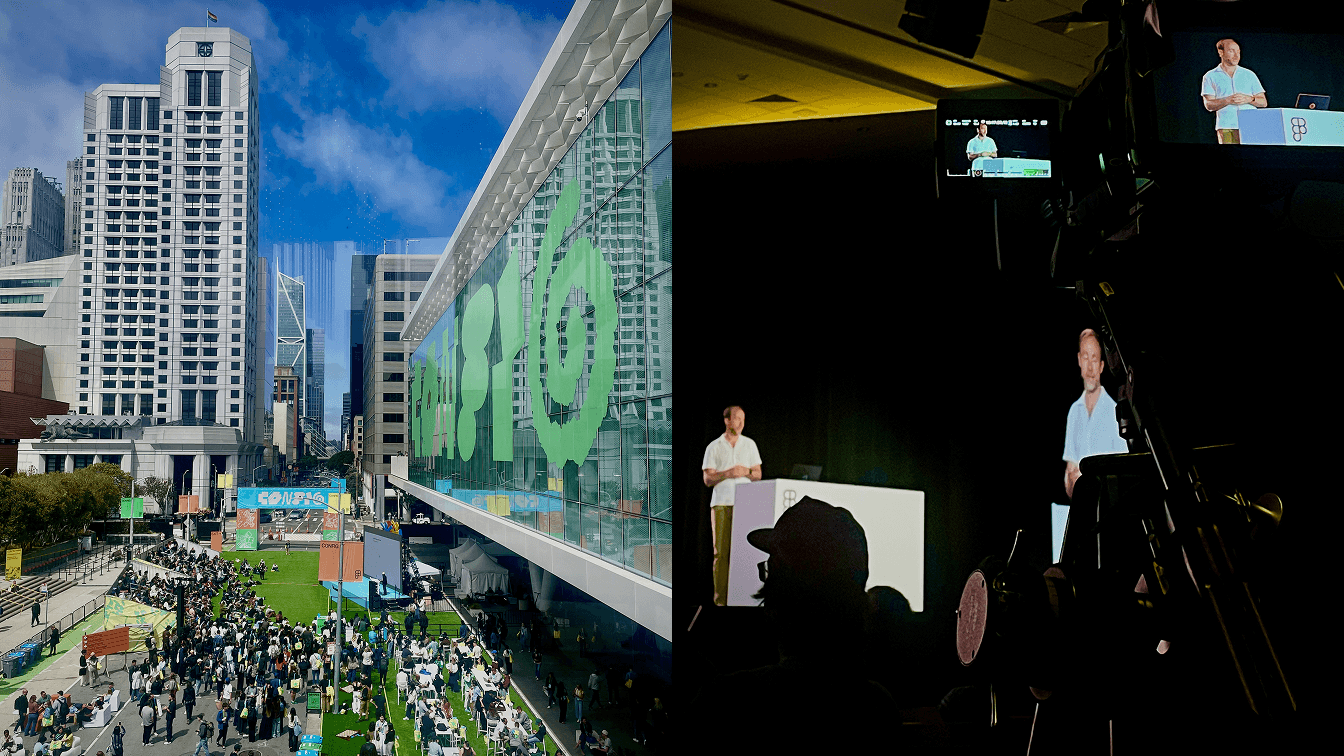





He told a room of fellow investors and aspiring technology companies that he’s trying to slow down his life so it doesn’t move so fast. He called what he has now “the gift of time”.
Everywhere else that day, the default was to go faster. AI’s speed compounds, requiring you to speed up lest you fall behind, and Armstrong described the other side of that: some things take the time they take, and rushing them costs more than it saves.
What speed is for
If going faster is the default, what are people using the speed for?
Etched, an artificial intelligence hardware startup, opened on compute. Gavin Uberti described agent swarms already working faster than people can produce, and a market where the frontier labs’ lead over open models has shrunk from about twelve months to two. In his view, the value is shifting to what you point it at (and the supply chain) not the models. If everyone can buy the same speed, it stops being an advantage.
Vercel showed what that looks like in practice; Jeanne DeWitt Grosser described a labs team that spent $1m in a month on tokens, pulling forward two years of the team’s roadmap. Getting there faster changed what Vercel had to think about. But a word of caution for vibe-coders, the tools that proved transformative were built and maintained by engineers. At that pace, the hard questions move to production and deployment. What happens when it breaks? Who owns it? Will it still be running in six months?
Eight years in
For me, Runway’s Cristóbal Valenzuela’s point connected most with the founders in the room that success isn’t overnight, and they’ve been on an eight-year journey to prove this point. It’s easy to forget that time is one facet of trust, and before anyone integrates your product into their workflow, they have to trust you’ll still be there tomorrow, so showing up and sticking to your brand promise matters most.
Runway is now at around $200m in revenue with 250 people. Valenzuela said the hardest part is sequencing research and product development. But the reality is that selling the product is what turned Runway’s research into revenue.
Some things don’t change.
So, if trust takes years, one must build on something people remember over that time. But how does that interplay with speed? The founders I spoke to at dinner were shipping a product, a pitch deck and a website in weeks but so can everyone else.
The biggest pain point, and something that hasn’t changed in the AI age, is that founders have to sell, and it’s getting harder. Everyone’s building on a handful of models with near-identical tools, and the result is the same structure, phrasing, and polish. In theory, nothing is wrong with any of it. But, people are finding it hard to trust LLM-generated materials.
The Gunderson Dettmer and Harvey panel, a leading law firm and an AI platform respectively, framed it that LLMs are plausibility-generating machines. Ask one to build a website, and you get a plausible website, the average of every site it has seen in its trawl of the internet. When the frontier lead is two months, and the tools are interchangeable, plausible is where everyone ends up, and a buyer who has seen ten plausible sites that week remembers none of them.
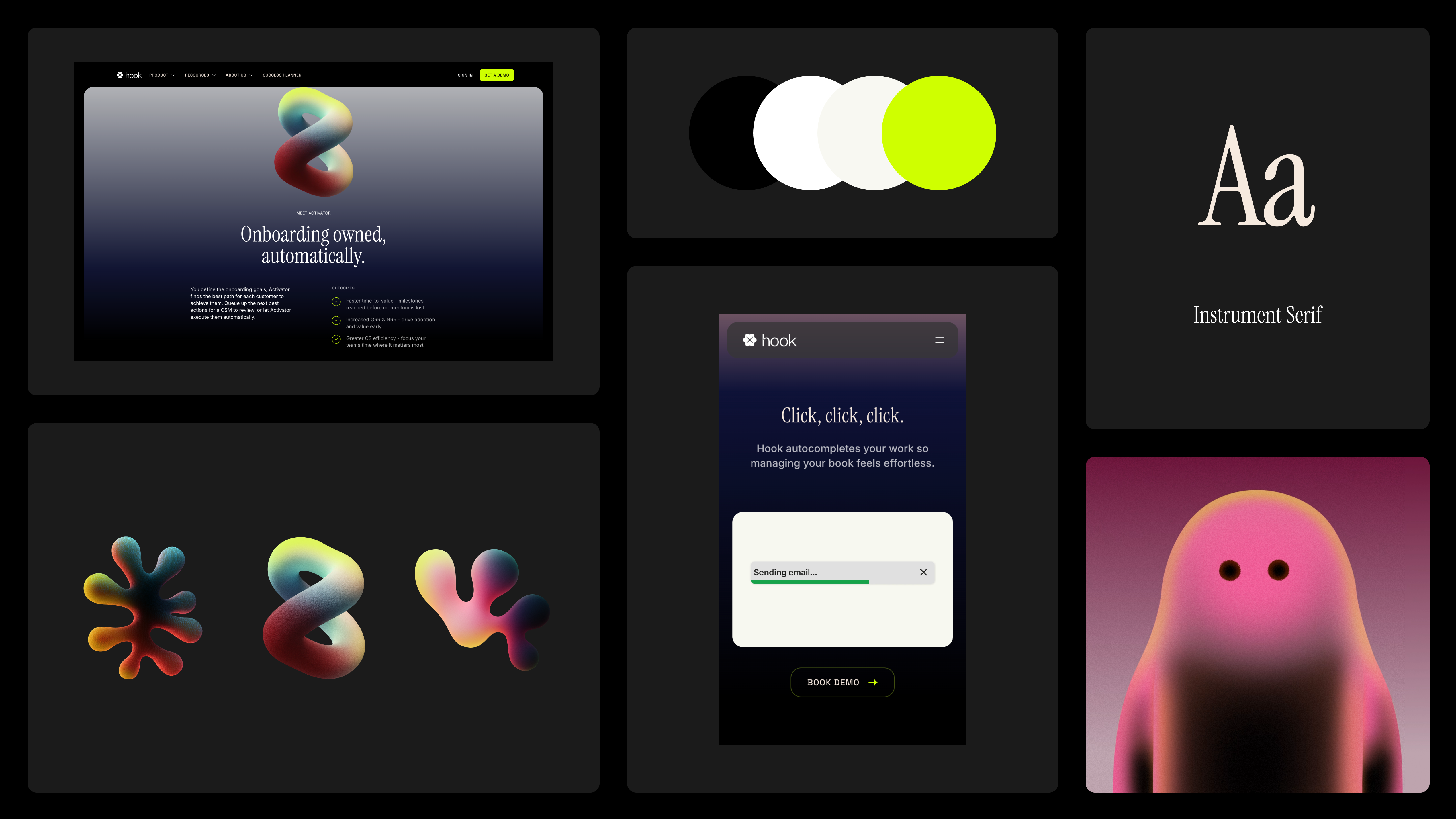
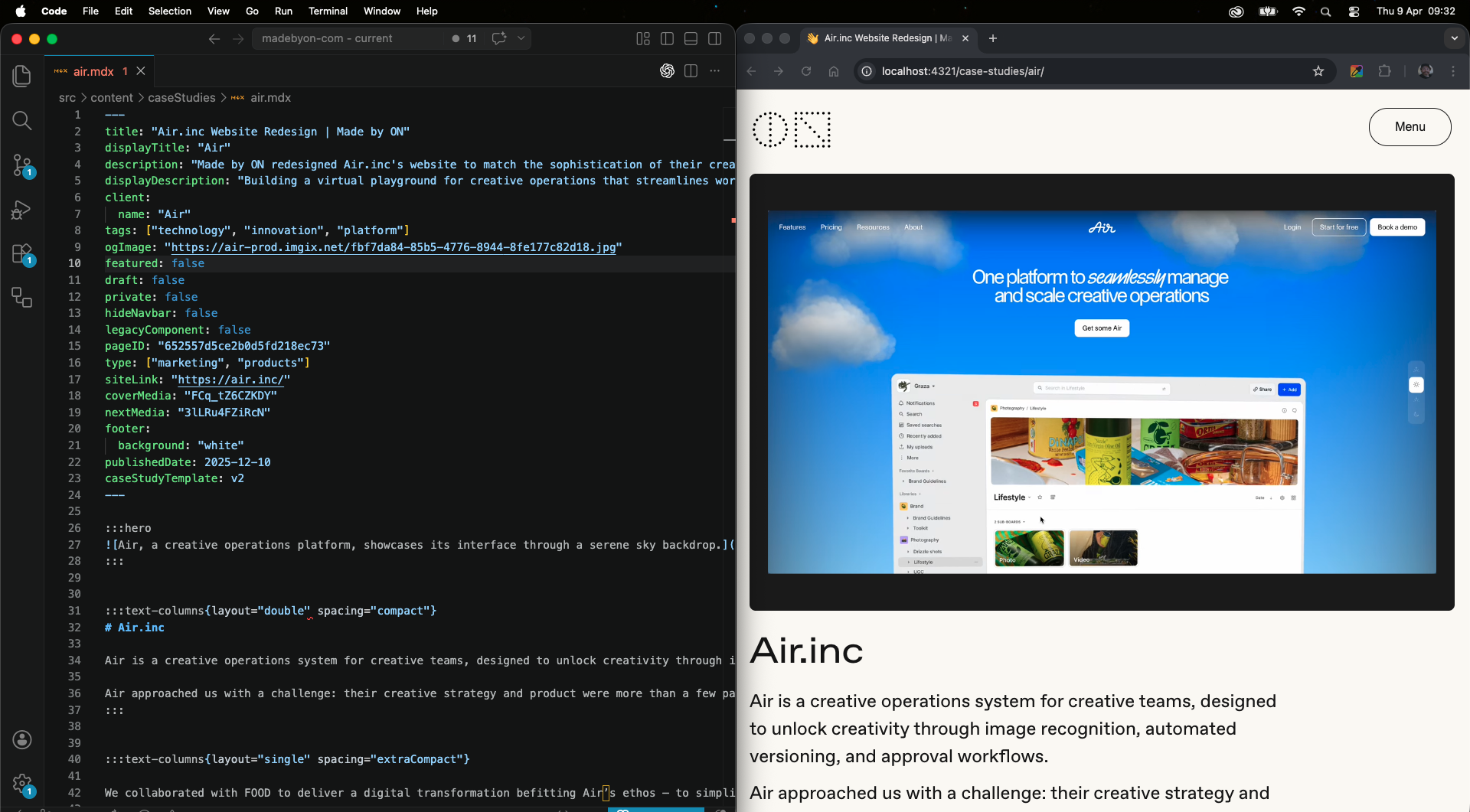
Differentiating yourself, just like our clients Air and avoiding the plausibility trap is the problem we spend most of our time helping founders with, especially as they reach Series A and beyond.
Our advice is simple. First, use the tools; the funding landscape doesn’t reward slowly building to a minimum viable product. Then, spend the time you’ve saved on what you know about your customer that nobody else has written down in the tone, the visual language, the one thing your product does that a competitor can’t.
Treat your website as a storefront on a crowded street. It needs curb appeal before a customer will walk in, and the tricks that worked on Main Street fifty years ago still hold while humans make the decisions.
Armstrong spent a career buying speed and lost it overnight. The tools have handed every founder a gift of time. How they choose to use that gift is what fascinates us, in our opinion, those who spend it going faster won’t win but the ones that invest in getting their customers to remember their brand will build a business that stays the test of this investment cycle.
You can learn more about the ways we’ve been working with Primary VC and early-stage founders.