The work between the work

The work between the work

Process can be standardised. Judgement cannot. I’ve spent most of my career around client and project management, both in-house and agency-side, and lately I’ve been noticing how much of doing it well comes down to knowing when a process needs to change. Timelines, budgets and resources still...

Studio
2d ago
Choosing the right tech stack

Choosing the right tech stack

Here at ON, we intentionally cast a wide net on the technologies that we work with. Across websites, web apps, native apps, installations, and platforms, we don’t tie ourselves to just one, because we recognise that there’s no such thing as “best”, but rather matching the right choices to the...

Engineering
Strategy
8d ago
Startups are prototypes

Startups are prototypes

A startup isn’t just an early-stage company. It’s a mechanism to reduce uncertainty. Every early customer, product release and funding round exists to answer one question: have we learned enough to justify the next investment? A startup is essentially a super complex prototype designed to validate...

Strategy
23d ago
The theme is the guardrail

The theme is the guardrail

WordPress can now describe itself to machines. WordPress 7.0 landed back in May with AI infrastructure in core. There’s an AI Client, a Connectors screen where the provider keys live, and the Abilities API, which actually arrived back in 6.9. Abilities are how core, plugins and themes describe what...

Engineering
1mo ago
Cache Components: the right content at the right time

Cache Components: the right content at the right time

Cast your mind back to the earlier days of the world wide web. A website was essentially a digital document, the web a library, and the internet the mechanism of delivery. Updating a document meant editing HTML on your computer and uploading it to a server by hand, usually over FTP. In 1995 PHP...

Engineering
2mo ago
We build by leaving things out

We build by leaving things out

Most of what makes a WordPress site good is what we choose to leave out of it. WordPress runs a large part of the web on a big promise: whatever you need, there’s a plugin for it. That promise is one of its greatest appeals, and its most costly trap. Almost everything that harms a WordPress site...

Engineering
2mo ago
Security deep dive

Security deep dive

Security questionnaires now arrive before, during and after the pitch. Your website needs to answer the questions buyers and machines already ask. A few weeks ago I wrote about your website being your biggest asset in an RFP. That piece ended on the unglamorous tier: security posture,...

Studio
15d ago
Shapeshifting the Future

Shapeshifting the Future

Every year we open our doors for a week to a student trying to find their way into the industry. Not work experience in the shadowing-only sense but a real placement, with a real brief. We do the same for a roomful of UCL students, in the studio for an afternoon. From the outside, a career in this...

Studio
29d ago

Your biggest asset in an RFP, your website

Your biggest asset in an RFP, your website. I’ve spent most of my career in B2B, and at Made by ON I spend my weeks talking to leaders of the world’s most exciting B2B businesses. Lately those conversations keep circling one question, which I put to our strategists and UX team: what happens when...

Studio
1mo ago
From static frames to a creative operating system

From static frames to a creative operating system

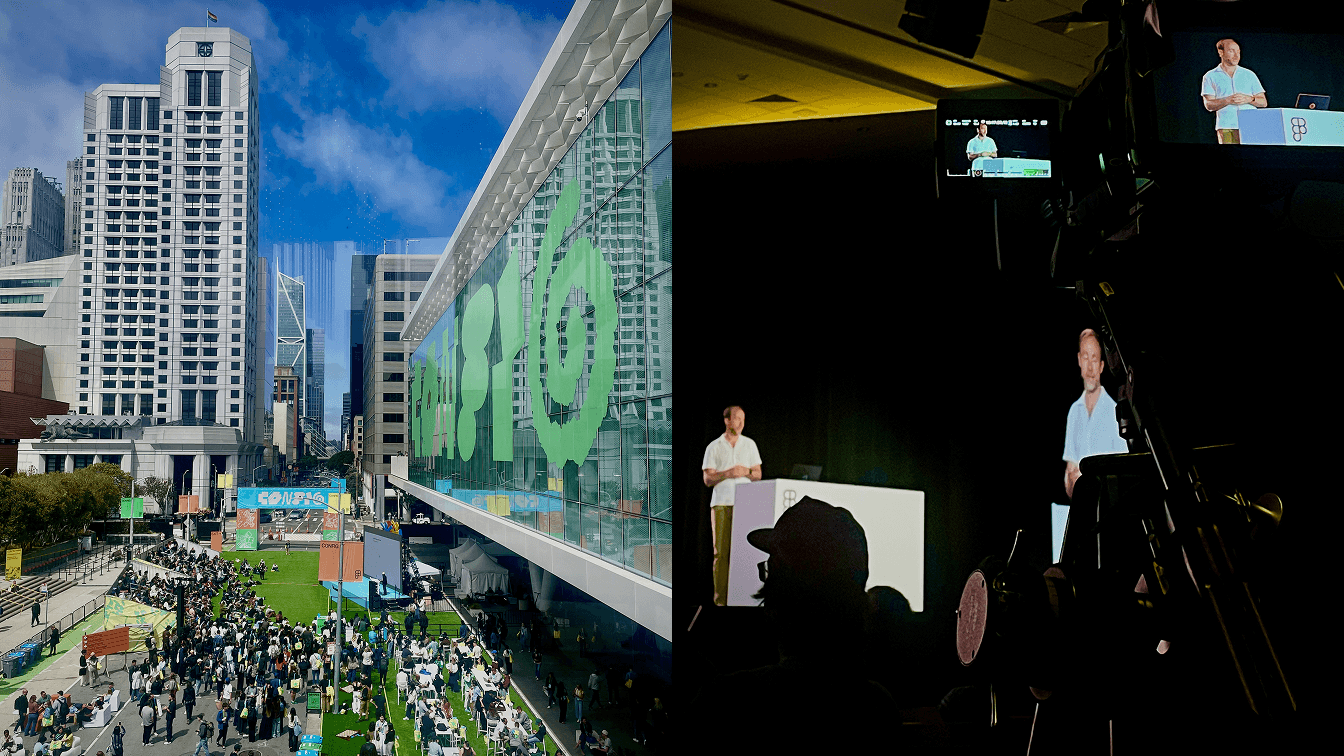
Looking beyond the flashy generative UI, shader effects and animation features at Figma Config signaled a deeper, more structural shift: the transition from a static repository of files and rules into a behavioural operating system. I left San Francisco with a camera roll of screenshots and pages...

Design
Engineering
2mo ago

The work between the work

Kristina RadonjicKristina Radonjic Studio
2 September 2026
3 min
The work between the work

Process can be standardised. Judgement cannot.

I’ve spent most of my career around client and project management, both in-house and agency-side, and lately I’ve been noticing how much of doing it well comes down to knowing when a process needs to change.

Timelines, budgets and resources still matter enormously. Increasingly, I see them as the structure that allows another kind of work to happen around them.

Producing the output isn’t the same as understanding it

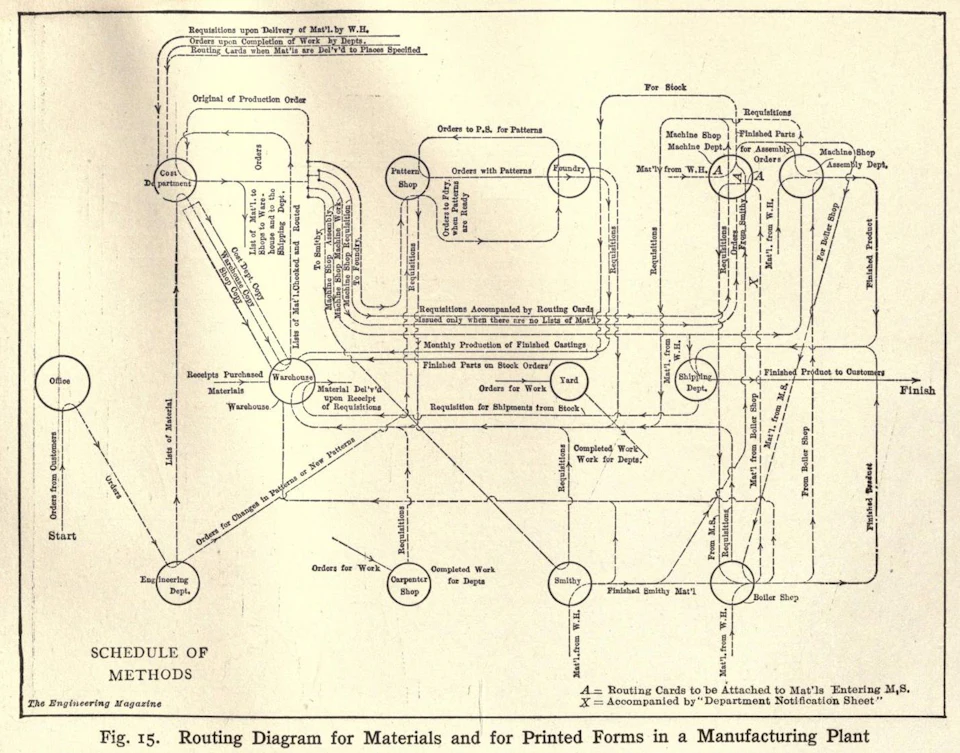
The Industrial Revolution gave us more than factories. It gave us a way of thinking about work: break it into repeatable parts, standardise the process, then find ways to do it faster and at a greater scale. That logic travelled far beyond the production line into the workflows and methodologies we still use today.

I’ve watched the same logic play out in marketing. Campaigns were mapped across the year and launches planned months in advance. But the world around those plans now moves incredibly quickly. Customer behaviour shifts, opportunities emerge and what felt relevant when a plan was made may not be by the time it reaches the market. Staying relevant means being able to respond by reordering the work, adapting approvals or getting something live while the moment still matters.

AI and automation are accelerating workflows, whether that’s writing code, building spreadsheets or structuring marketing plans. Producing the output has never been easier. Knowing whether it’s right, what matters and what to do with it requires expertise and judgement now more than ever.

Structure gives us something to move around

Perhaps I’m naturally drawn to systems. Both of my parents are engineers, and much of my career has involved looking at how something works and wondering how it could work better.

Leading project management teams, I always aimed to make complex work structured and repeatable. At one point, we built a marketing operations system around media plans coming in from markets across the world. Standardising those inputs gave the production studio a clear way to understand what was required and produce the right outputs. At that scale, structure made the work possible. However, experience has taught me to recognise what the situation in front of me requires, rather than simply following the process.
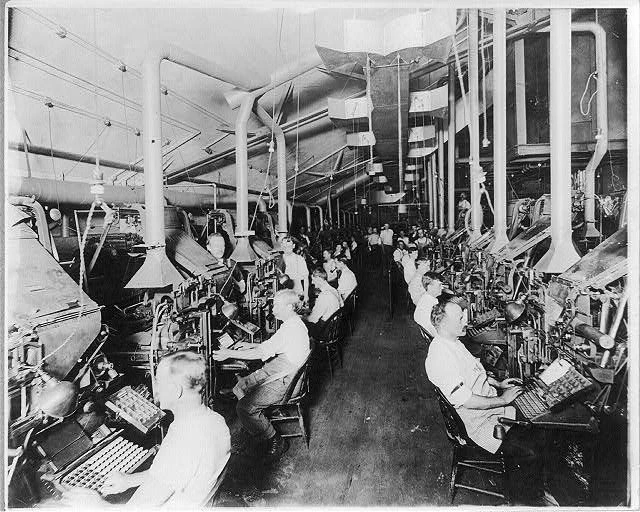
Newspaper publishing, N.Y. Herald: Composing room and linotype machines, 1902.
The machines do the repeatable part, the person leaning in decides whether it’s right.

Here at Made by ON, we’ve come to think of the role less as just project management and more as holistic aspects of delivery. The emphasis shifts from managing a process to taking responsibility for what we are ultimately there to deliver.

That requires judgement and an understanding of people. Every client and team has its own culture, pressures and ways of working. Good Delivery means understanding those differences and shaping the process around how the people and teams involved actually work best.

The relationship changes the work

That may also be why Delivery is appearing earlier. It increasingly starts before everything has been defined, helps shape the route and stays close as it evolves.

Getting that right means getting closer to the people and the business: understanding what matters, recognising when to challenge or listen, and building enough trust to change direction when needed.

Pressmen watching pages run through the presses at The New York Times, 1942
The presses run themselves, the pressmen watch, check and judge

I used to think I was helping to deliver projects. Increasingly, I think doing that well also means helping to deliver the relationships around them.

And if making our processes more efficient gives us anything back, it should be time. Time for the work that only people can do. The work between the work.

Jul 2026

One of the 214 hand-drawn sheets of Inō’s map of Japan, and his team surveying Mitarai in 1806

Measure

In 1800 a retired sake brewer named Inō Tadataka set out to walk Japan’s coast. He spent 17 years and 35,000 km on foot, and died before the work was done. His team finished the first accurate map of Japan in 1821, and it stayed in use for a century.

Jun 2026

William Badcock, A Touch-stone for Gold and Silver Wares (1677)

Hallmark

The word hallmark comes from an actual hall, Goldsmiths’ Hall in London, where since 1300 silver has been tested against the sterling standard and struck with the hall’s mark, so you could trust it without knowing the maker.

May 2026

Alan Kay: His Sketches, Piano, and Computer

Notes

A note can be a written record, a struck key, or the act of noticing, and each sharpens how we understand the world. A piano is an instrument, but also a technology built on the notes it makes possible.

Apr 2026

Photographs of a red cloth bound travel handbook from 1894. The book is open to show pages with maps and illustrations.

Change

A red cloth spine caught my eye in a Tokyo bookshop last week. A handbook for travellers in Japan, fourth edition, 1894. I was 132 years late, yet most of what it describes still stands.

Mar 2026

Screenshots from the development process of the new ON release notes page

Taking the temperature

You walk into a room and you can feel it. Whether there is energy or not. We describe someone as warm. We talk about things cooling down. Temperature is something we sense before we have words for it.

Feb 2026

Pixelised image of a horse running

Rethinking video, prototyping faster, and encoding brand logic

In Japanese, the character for hand is 手. Joined with the character for craft, it becomes 手仕事 (teshigoto), or handwork.

Want to know more?

On the last Sunday of every month, we share insights on creative thinking, emerging tools, technology.