

The work between the work

The work between the work

Process can be standardised. Judgement cannot. I’ve spent most of my career around client and project management, both in-house and agency-side, and lately I’ve been noticing how much of doing it well comes down to knowing when a process needs to change. Timelines, budgets and resources still...

Studio
2d ago
Choosing the right tech stack

Choosing the right tech stack

Here at ON, we intentionally cast a wide net on the technologies that we work with. Across websites, web apps, native apps, installations, and platforms, we don’t tie ourselves to just one, because we recognise that there’s no such thing as “best”, but rather matching the right choices to the...

Engineering
Strategy
8d ago
Startups are prototypes

Startups are prototypes

A startup isn’t just an early-stage company. It’s a mechanism to reduce uncertainty. Every early customer, product release and funding round exists to answer one question: have we learned enough to justify the next investment? A startup is essentially a super complex prototype designed to validate...

Strategy
23d ago
The theme is the guardrail

The theme is the guardrail

WordPress can now describe itself to machines. WordPress 7.0 landed back in May with AI infrastructure in core. There’s an AI Client, a Connectors screen where the provider keys live, and the Abilities API, which actually arrived back in 6.9. Abilities are how core, plugins and themes describe what...

Engineering
1mo ago
Cache Components: the right content at the right time

Cache Components: the right content at the right time

Cast your mind back to the earlier days of the world wide web. A website was essentially a digital document, the web a library, and the internet the mechanism of delivery. Updating a document meant editing HTML on your computer and uploading it to a server by hand, usually over FTP. In 1995 PHP...

Engineering
2mo ago
We build by leaving things out

We build by leaving things out

Most of what makes a WordPress site good is what we choose to leave out of it. WordPress runs a large part of the web on a big promise: whatever you need, there’s a plugin for it. That promise is one of its greatest appeals, and its most costly trap. Almost everything that harms a WordPress site...

Engineering
2mo ago
Security deep dive

Security deep dive

Security questionnaires now arrive before, during and after the pitch. Your website needs to answer the questions buyers and machines already ask. A few weeks ago I wrote about your website being your biggest asset in an RFP. That piece ended on the unglamorous tier: security posture,...

Studio
15d ago
Shapeshifting the Future

Shapeshifting the Future

Every year we open our doors for a week to a student trying to find their way into the industry. Not work experience in the shadowing-only sense but a real placement, with a real brief. We do the same for a roomful of UCL students, in the studio for an afternoon. From the outside, a career in this...

Studio
29d ago

Your biggest asset in an RFP, your website

Your biggest asset in an RFP, your website. I’ve spent most of my career in B2B, and at Made by ON I spend my weeks talking to leaders of the world’s most exciting B2B businesses. Lately those conversations keep circling one question, which I put to our strategists and UX team: what happens when...

Studio
1mo ago
From static frames to a creative operating system

From static frames to a creative operating system

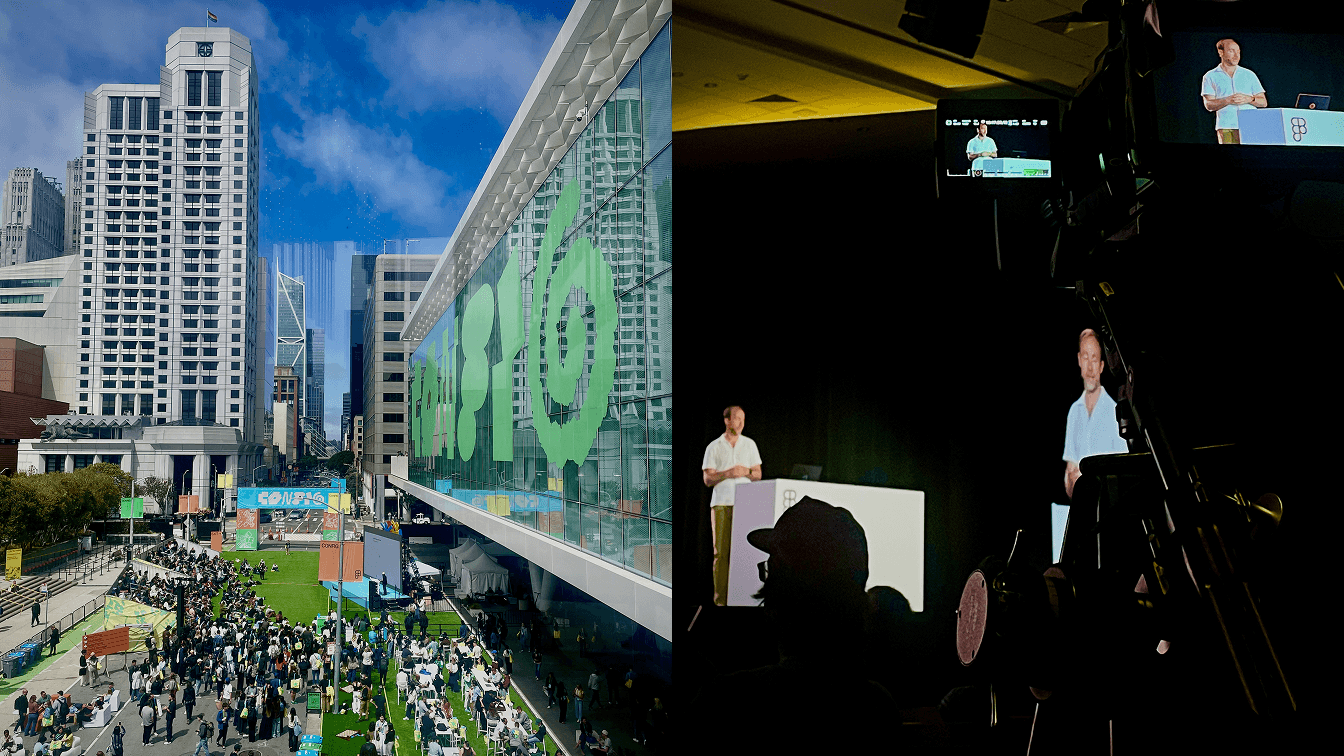
Looking beyond the flashy generative UI, shader effects and animation features at Figma Config signaled a deeper, more structural shift: the transition from a static repository of files and rules into a behavioural operating system. I left San Francisco with a camera roll of screenshots and pages...

Design
Engineering
2mo ago

Choosing the right tech stack

Guanglun WuGuanglun Wu Engineering Strategy
27 August 2026
3 min
Choosing the right tech stack

Convention and conviction

Here at ON, we intentionally cast a wide net on the technologies that we work with. Across websites, web apps, native apps, installations, and platforms, we don’t tie ourselves to just one, because we recognise that there’s no such thing as “best”, but rather matching the right choices to the situation. We intentionally build flexibility into our model in order to deliver better outcomes.

Our starting point is convention and conviction. Convention: in the small range of curated tech stacks that we’ve found to be flexible, safe, and scalable across hundreds of projects. Things that just work, and guard against swimming upstream. Conviction: in knowing that these recommendations carry the weight of years of hard-won experience. Not just through launch, but growing and maintaining them alongside client teams. It’s the application of hindsight to evaluate how well the system works; and works for the people it touches: the users, the team who maintain it, and the stakeholders whose vision it must carry.
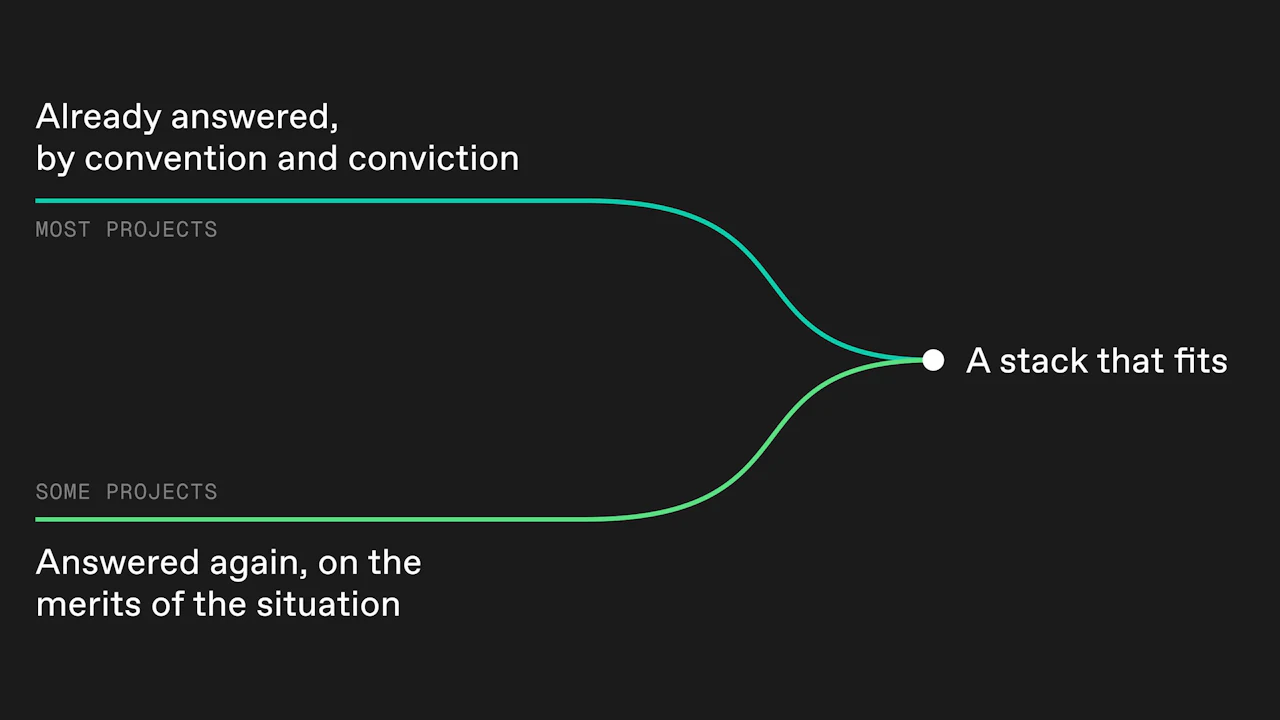
Figure 02: Technology decision-making visual

How a recommendation arrives

I often talk about holding strong opinions in order to achieve forward momentum, but being open to listening and having these opinions challenged. And that’s very much true here, in that we talk about the conventions because they fit the majority of use cases and cut through the noise; but there are sometimes situations that call for a different approach. And in these cases, it’s about finding the balance to be flexible and meticulous in evaluating the choices on their merits, and picking the right one. This might be influenced by a stakeholder’s preference, because they’re especially familiar with one system; or by the hosting and scaling considerations; or by how transactions need to be handled; or influenced by a plugin ecosystem; or a multitude of other factors.

How conviction is actually formed

And ultimately, in having this flexibility to work across multiple systems, we gain that all-important experience that feeds back into future selections. Our recommendations don’t simply come through a spec sheet, but through a deep and lived-in knowledge, and through years of operating and scaling. Technology doesn’t stand still, and neither do we in our assumptions of what fits today, and what fits tomorrow.

Figure 03: Composable systems visual

Ultimately, choosing the right tech stack is a mix of technical, commercial, operational, and human factors. It must be assessed with the goal in mind, but there’s also no need to reinvent the wheel, and that’s where experience wins out. And for systems that get more complex, planning for a composable stack can allow different systems to sit together in harmony, but that’s a field note for a different time.

Jul 2026

One of the 214 hand-drawn sheets of Inō’s map of Japan, and his team surveying Mitarai in 1806

Measure

In 1800 a retired sake brewer named Inō Tadataka set out to walk Japan’s coast. He spent 17 years and 35,000 km on foot, and died before the work was done. His team finished the first accurate map of Japan in 1821, and it stayed in use for a century.

Jun 2026

William Badcock, A Touch-stone for Gold and Silver Wares (1677)

Hallmark

The word hallmark comes from an actual hall, Goldsmiths’ Hall in London, where since 1300 silver has been tested against the sterling standard and struck with the hall’s mark, so you could trust it without knowing the maker.

May 2026

Alan Kay: His Sketches, Piano, and Computer

Notes

A note can be a written record, a struck key, or the act of noticing, and each sharpens how we understand the world. A piano is an instrument, but also a technology built on the notes it makes possible.

Apr 2026

Photographs of a red cloth bound travel handbook from 1894. The book is open to show pages with maps and illustrations.

Change

A red cloth spine caught my eye in a Tokyo bookshop last week. A handbook for travellers in Japan, fourth edition, 1894. I was 132 years late, yet most of what it describes still stands.

Mar 2026

Screenshots from the development process of the new ON release notes page

Taking the temperature

You walk into a room and you can feel it. Whether there is energy or not. We describe someone as warm. We talk about things cooling down. Temperature is something we sense before we have words for it.

Feb 2026

Pixelised image of a horse running

Rethinking video, prototyping faster, and encoding brand logic

In Japanese, the character for hand is 手. Joined with the character for craft, it becomes 手仕事 (teshigoto), or handwork.

Want to know more?

On the last Sunday of every month, we share insights on creative thinking, emerging tools, technology.