Your biggest asset in an RFP, your website

Your biggest asset in an RFP, your website. I've spent most of my career in B2B, and at Made by ON I spend my weeks talking to leaders of the world's most exciting B2B businesses. Lately those conversations keep circling one question, which I put to our strategists and UX team: what happens when...

Studio
5h ago
Cache Components: the right content at the right time

Cache Components: the right content at the right time

Cast your mind back to the earlier days of the world wide web. A website was essentially a digital document, the web a library, and the internet the mechanism of delivery. Updating a document meant editing HTML on your computer and uploading it to a server by hand, usually over FTP. In 1995 PHP...

Engineering
8d ago
We build by leaving things out

We build by leaving things out

Most of what makes a WordPress site good is what we choose to leave out of it. WordPress runs a large part of the web on a big promise: whatever you need, there’s a plugin for it. That promise is one of its greatest appeals, and its most costly trap. Almost everything that harms a WordPress site...

Engineering
22d ago
Letting type move

Letting type move

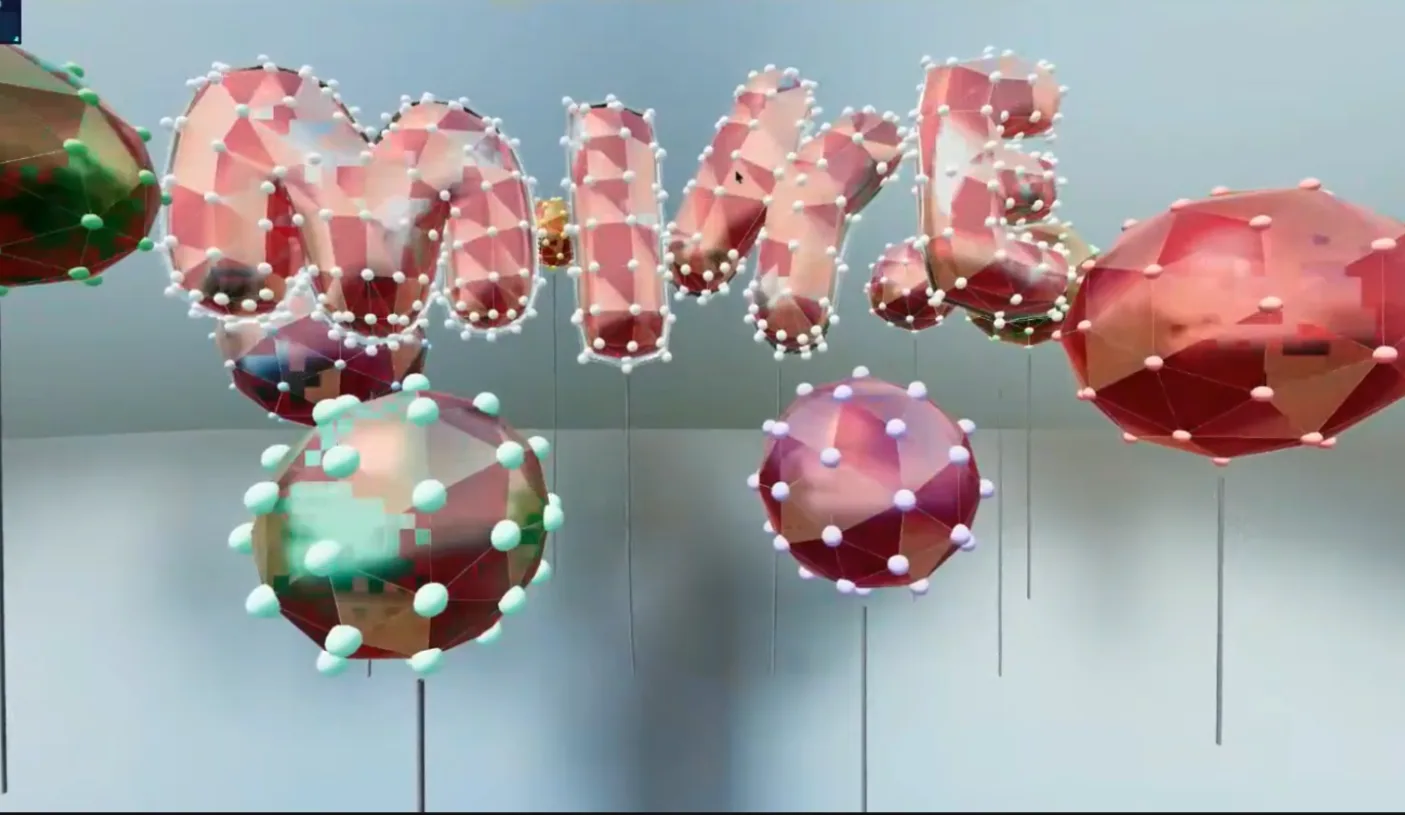
We treat type as something that sits still — fixed in place, headings always the biggest thing, motion bolted on at the end. For one Creative Spark we dropped those rules and asked what type could do once it started moving. Creative Spark is our in-house R&D session: ninety minutes, a single theme,...

Engineering
1mo ago
The cache that doubled as a coordinator

The cache that doubled as a coordinator

The rendering engine is what visitors see. The data layer feeds it, and keeping it stable under load was the less glamorous half of the build. This is the second post in the ON Labs series. The first covered the WebGL engine: shaders, draw calls, the GPU-level stuff. This one is about what happens...

Engineering
2mo ago
The testbed nobody will see

The testbed nobody will see

Every case study was a standalone Astro page with its own layout, its own component imports and its own way of breaking on mobile. Twenty-two of them. Each one built at a different time by a different combination of people, with whatever patterns felt right that week. Changing shared behavior (a...

Engineering
2mo ago
From static frames to a creative operating system

From static frames to a creative operating system

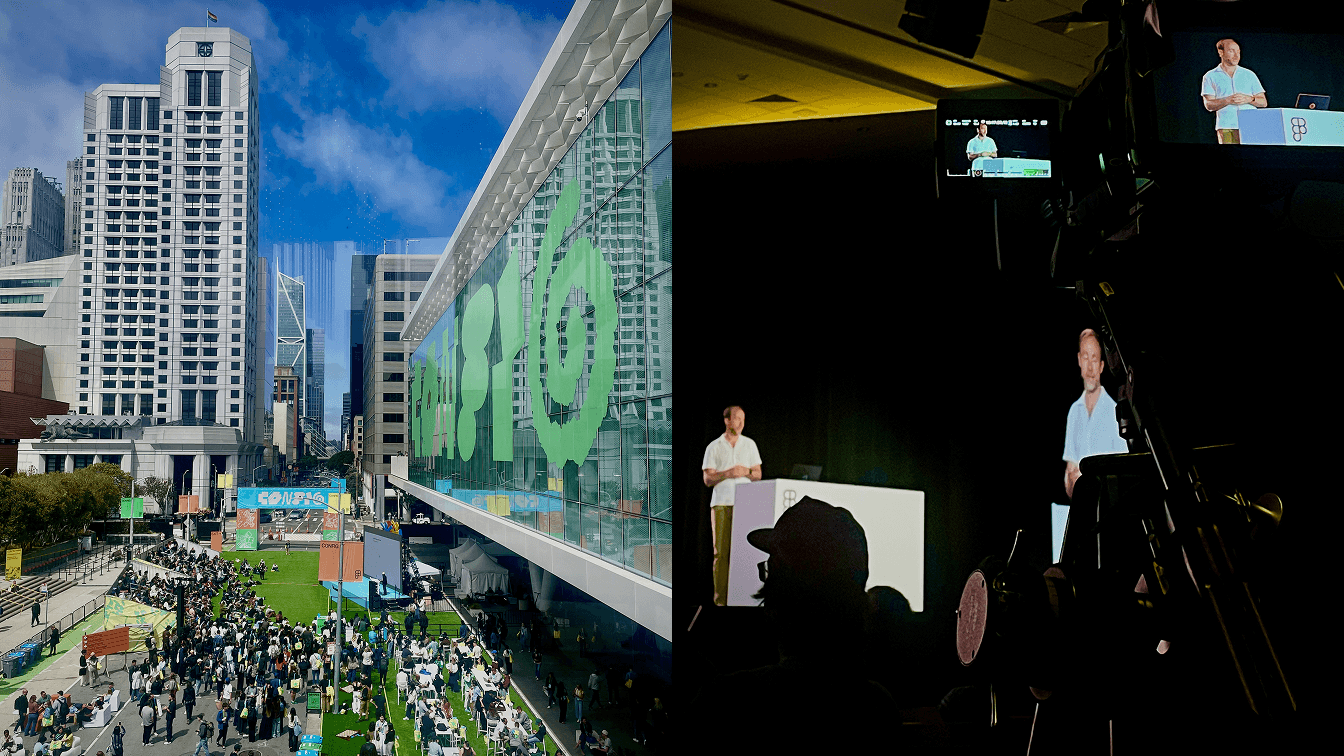
Looking beyond the flashy generative UI, shader effects and animation features at Figma Config signaled a deeper, more structural shift: the transition from a static repository of files and rules into a behavioural operating system. I left San Francisco with a camera roll of screenshots and pages...

Design
Engineering
15d ago

Standardise the foundations, not the brand experience

Detailed work at scale comes down to one judgement: which parts of a project are worth building fresh for every brand, and which should be solved once and reused everywhere. Shared functionality on one side, brand expression on the other Engineering teams have plenty of frameworks and platforms to...

Engineering
29d ago
Putting video back where it belongs

Putting video back where it belongs

The problem with putting video in a git repo. The repo kept getting heavier, sprint after sprint. We were committing big MP4s next to the code, builds were slowing down, and deploys with them. Case studies lead with video, so every new client made it worse. We needed the media to live somewhere...

Engineering
1mo ago
Twenty-four modules, one wrapper

Twenty-four modules, one wrapper

Every case study was its own Astro page. That was the first problem. Each page had its own layout logic, its own spacing decisions, its own way of handling full-bleed sections versus contained text. Some used inline styles. Some used one-off SCSS files. None of them agreed on what "default spacing"...

Design
2mo ago

Your biggest asset in an RFP, your website

Barry CumberlidgeBarry Cumberlidge Studio
23 July 2026
6 min

Your biggest asset in an RFP, your website.

I’ve spent most of my career in B2B, and at Made by ON I spend my weeks talking to leaders of the world’s most exciting B2B businesses. Lately those conversations keep circling one question, which I put to our strategists and UX team: what happens when buyers draft their request for proposal (RFP) evaluation criteria with an LLM?

Most industries are small and relationships count, so procurement of new services and tools for a business arrives in two temperatures. Friendly processes, where you’re known and your site’s job is to smooth the path and shape the requirement. Cold ones, now where a machine decides whether you exist at all.

Your website writes their RFP

The critical question is the website helping pass the screening criteria or is it shaping the brief?

Some fundamentals in business do not change, in bygone days, shaping the RFP was the oldest trick in enterprise sales. Get to the buyer early, help them define the requirement, and watch the requirement describe you. Now procurement teams are using AI to scan your site for as much of the information they need to construct the RFP before they even speak to you.

Nobody is searching for you - the cold truth of procurement
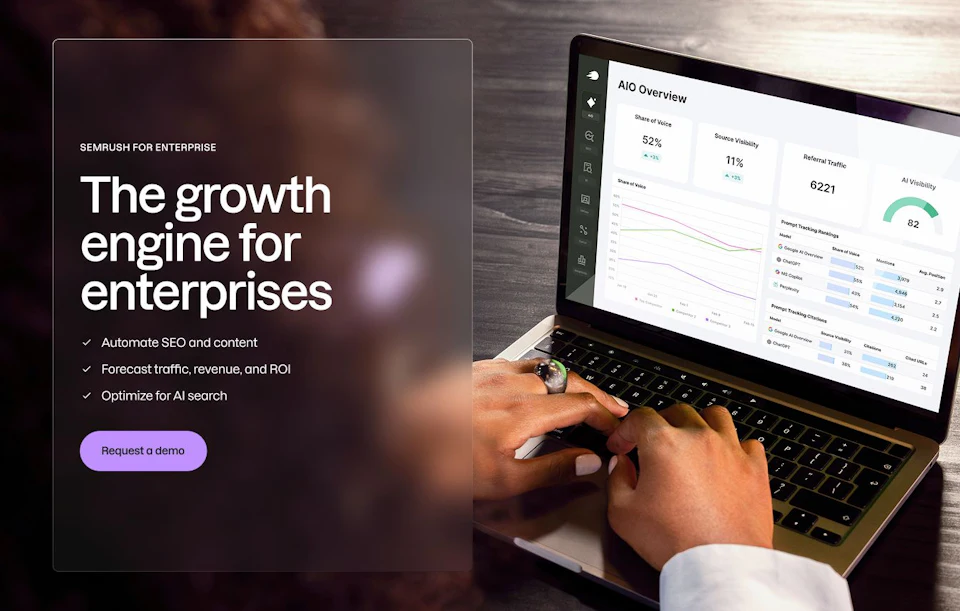
This image shows a person using a laptop on a wooden surface. The laptop screen displays a dashboard with various metrics and charts Semrush turns search visibility into evidence, the same kind of signal procurement teams now expect before a sales conversation starts.

Imagine the scene, a large RFP lands in your company’s shared email address cold out of nowhere. Palpable excitement from your sales team, and even though you might not win this time, it allows for a new set of contacts for the CRM.

This is gold dust because it shows that your website is working; digital is delivering top-of-funnel (TOFU) leads for the business. For us at Made by ON, it’s the biggest moment of validation in the investment cycle for a new B2B site, and we tend to celebrate this more than go live.

The latest research that is emerging is providing weight to this, and that’s because we need to step into the shoes of the procurement team; they’re working their business problem through an LLM, and somewhere in that exchange the machine suggests vendors.

Forrester surveyed 18,000 B2B buyers in January1. 94% used AI during their most recent purchase, and AI answer engines now outrank vendor websites and sales reps as the primary research source. 6sense tracked 4,000 buyers on deals with a median size above $300,0002; the winning vendor was on the day-one shortlist 95% of the time.

What this means for your organisation

Inside most organisations the website belongs to marketing, while sales depends on it to close. In stakeholder interviews that we’ve collectively spent the equivalent of weeks conducting, we’ve seen the same tensions surface every time: sales feels the site isn’t sweating hard enough on what they face in the field; marketing is trying to propel brand led growth strategies within the confines of the system created by various stakeholders from design, customer services, research teams and so on.

The first fix is change management, walking both sides through the anatomy of a B2B site as a machine reads it: the homepage, the product pages, the live content, and the tier of information nobody owns.

Homepage

Bluntly, machines don’t enter just through the front door; they land sideways, on whichever page answers the question. Therefore, every page is a front door now, and every page needs to say who this is for and why it holds up.

Product (PDP) pages
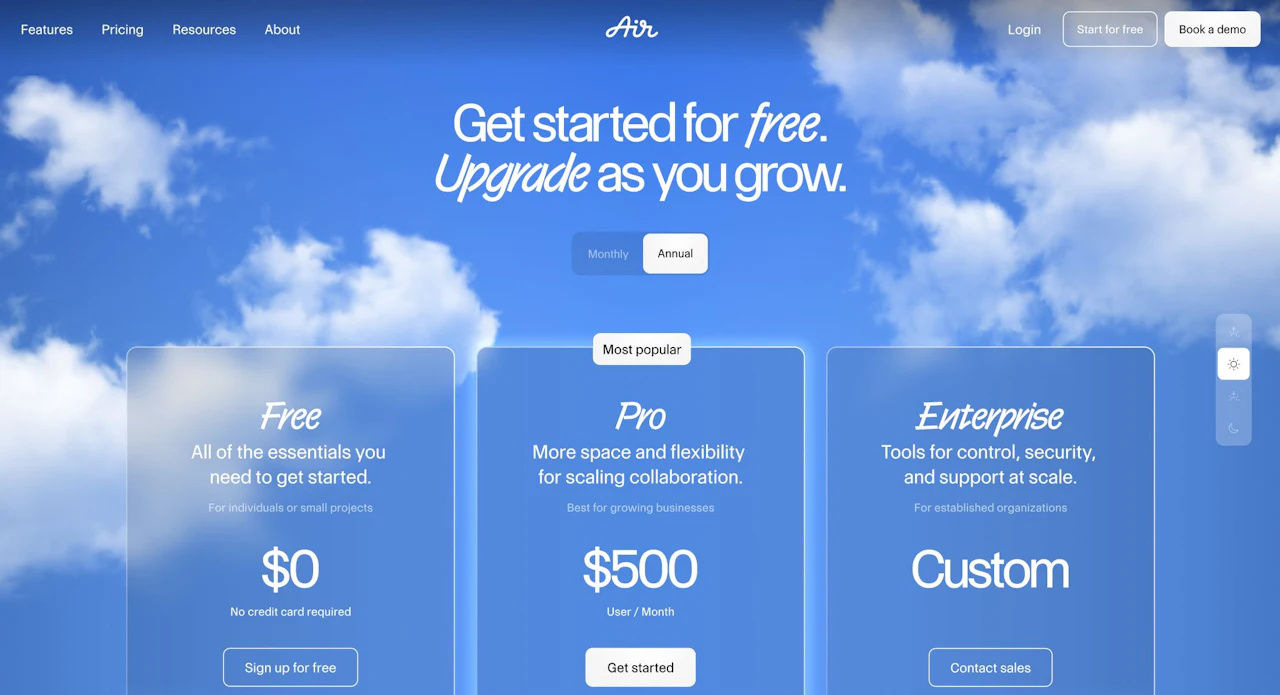
Air product page showing product information and supporting evidence for creative operations buyers. The product page has to work for both human buyers and the machine-readable evaluation layer forming around them.

This is where the battleground between sales and marketing exists.

In the machine world, the PDP stops persuading and starts evidencing. Enterprise procurement doesn’t want a benefits carousel. It wants specs, integrations, implementation timelines, commercial models, real pricing ranges.

Princeton ran the first peer-reviewed study of AI search in 20243, testing nine content tactics across 10,000 queries. Statistics, cited sources and quotations won, worth up to 40% more visibility in AI answers. The PDP that reads like a data sheet gets quoted, and the one that reads as a billboard gets skipped.

From a marketing and brand perspective, a balance needs to be found between the transactional machine world and the human eyes that need to feel that the product can solve a real-world problem for them.

Live content feeds e.g. blog, case studies, news

Rho customer story cards for Perplexity, Revyl and Fazeshift, each presenting a customer outcome as social proof. Case studies turn customer outcomes into evidence that both buyers and machines can use during evaluation.

The biggest wins (and ultimately success stories) are where we’re shaping the content strategy as part of the overall communications strategy, this is by stress testing the purpose and potential efficacy of the content.

Content written to feed last decade’s search algorithm is dead weight. Content that answers a buying-committee question, or builds the evaluation framework for your category, becomes the citation layer the machine draws from.

A cornerstone to a B2B site is case studies, this is ‘social proof’ without being in social channels and was critical when we developed ways for Rho (a leading financial platform) to handle competitor objections. Ultimately whether a machine reads the content or a human, the same questions need to be answered in an interesting and succinct way.

It has to cover the problem, what was built or solved, what it changed, and ultimately what benefit the end client had. The crucial aspect is to be confident and talk in numbers, have quotes and references that matter.

The missing tier of information

Rho security page showing controls, permissions and monitoring as account protection evidence for business buyers. Security, compliance and partner information becomes part of the evaluation layer long before procurement speaks to sales.

And the unglamorous tier finally matters. Security posture, certifications, compliance, accessibility statements and a ton of relevant industry-specific information that is often invisible to the marketing/brand team.

Across all the touchpoints I’ve just covered, the information architecture becomes critical as product complexity increases, when clients reach Series B (in venture terms) or add multiple product lines (in more traditional industries), this is where our UX researchers come into their own solving extremely gnarly problems. That said and honestly, the problem today was the problem yesterday; semantic markup and structured data were machine-readable twenty years before anyone used the phrase.

Closing thoughts

When someone in your business asks you about AEO and GEO or ways that AI might be engaging with your services and products on your site, make it relevant; think about your sales process and think about your sales funnel.

Ultimately, whether you’re a marketer, sales, or technology leader, your website needs to help sales at the top, middle and bottom of the funnel, especially if you’re skewed to enterprise sales.

There is no doubt that website design and building is a scientific endeavour, but in the age of machines, the art is making it human too.

Footnotes

  1. https://www.forrester.com/press-newsroom/forrester-2026-the-state-of-business-buying/

  2. https://6sense.com/science-of-b2b/buyer-experience-report-2025/

  3. https://collaborate.princeton.edu/en/publications/geo-generative-engine-optimization/

June 2026

William Badcock, A Touch-stone for Gold and Silver Wares (1677)

Hallmark

The word hallmark comes from an actual hall, Goldsmiths’ Hall in London, where since 1300 silver has been tested against the sterling standard and struck with the hall’s mark, so you could trust it without knowing the maker.

May 2026

Alan Kay: His Sketches, Piano, and Computer

Notes

A note can be a written record, a struck key, or the act of noticing, and each sharpens how we understand the world. A piano is an instrument, but also a technology built on the notes it makes possible.

April 2026

Photographs of a red cloth bound travel handbook from 1894. The book is open to show pages with maps and illustrations.

Change

A red cloth spine caught my eye in a Tokyo bookshop last week. A handbook for travellers in Japan, fourth edition, 1894. I was 132 years late, yet most of what it describes still stands.

Mar 2026

Screenshots from the development process of the new ON release notes page

Taking the temperature

You walk into a room and you can feel it. Whether there is energy or not. We describe someone as warm. We talk about things cooling down. Temperature is something we sense before we have words for it.

Feb 2026

Pixelised image of a horse running

Rethinking video, prototyping faster, and encoding brand logic

In Japanese, the character for hand is 手. Joined with the character for craft, it becomes 手仕事 (teshigoto), or handwork.

Jan 2026

Illustration showing the laying of undersea Atlantic telegraph cables

Transmission

The first dispatch of a new year, and I’m thinking about transmission: the message, the vessel that carries it, and what happens when they finally meet their destination.

Want to know more?

On the last Sunday of every month, we share insights on creative thinking, emerging tools, technology.