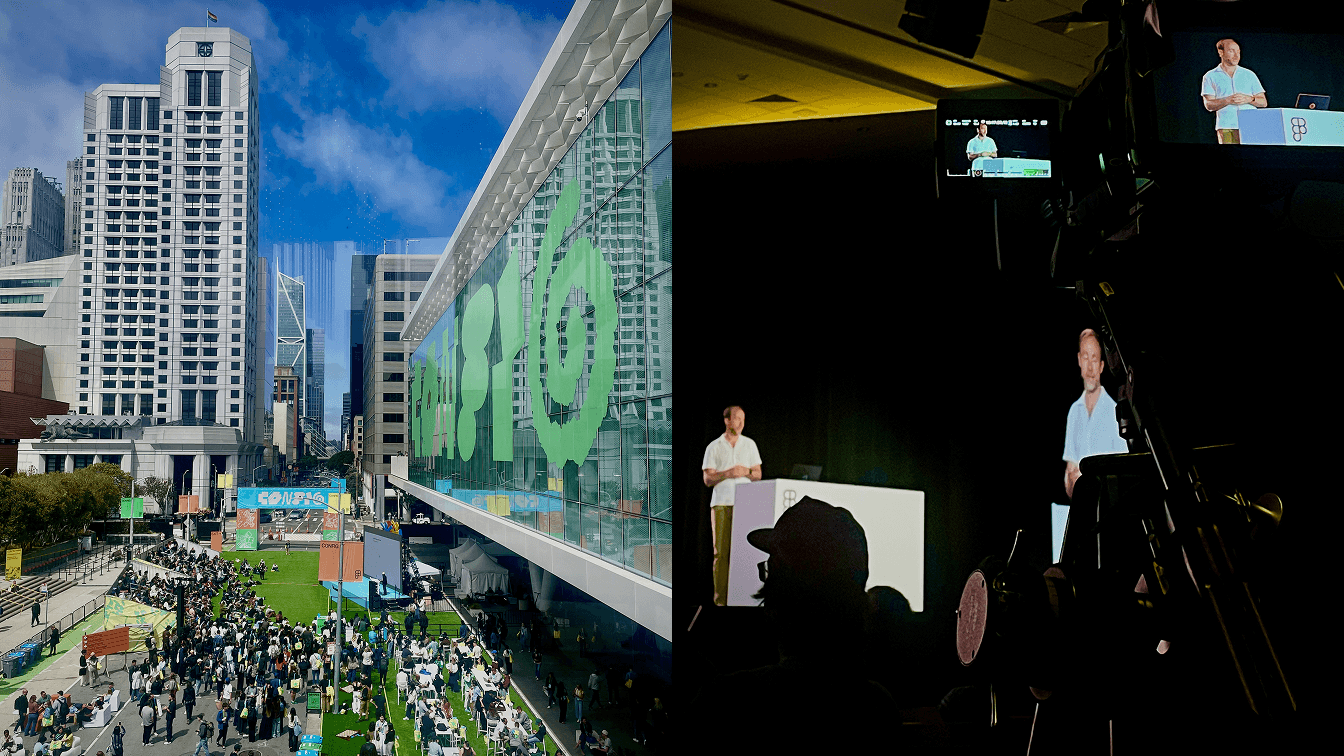



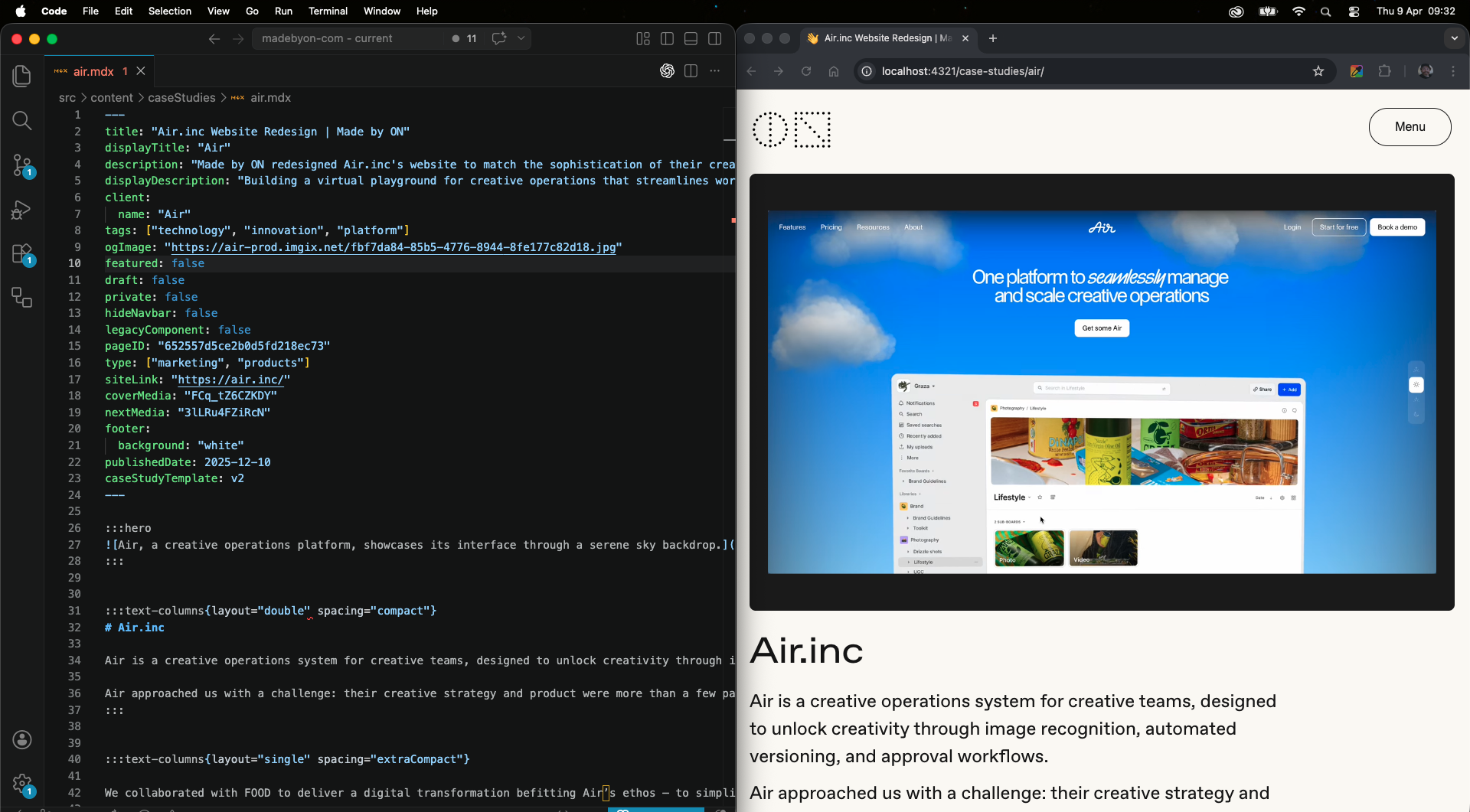
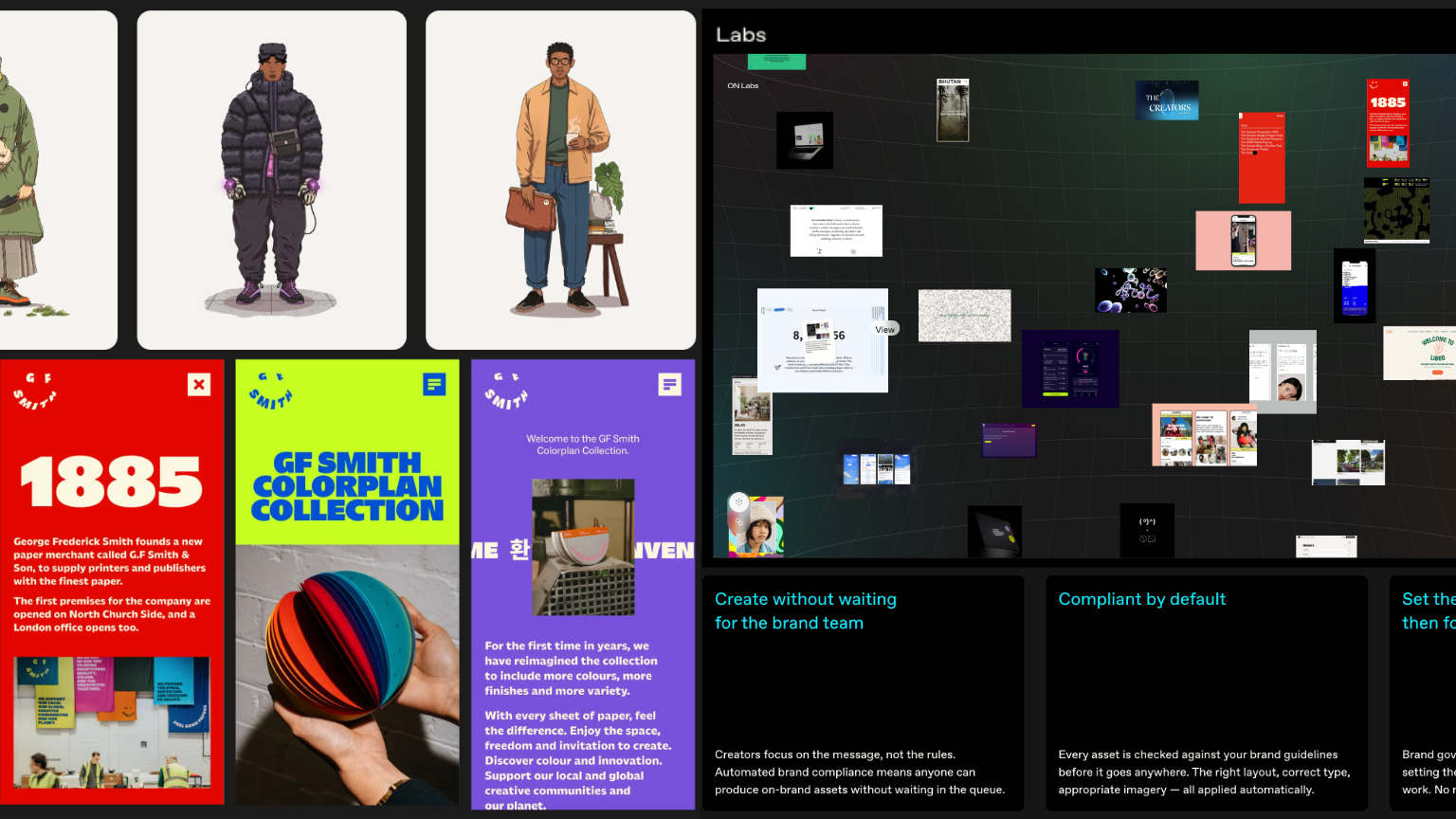
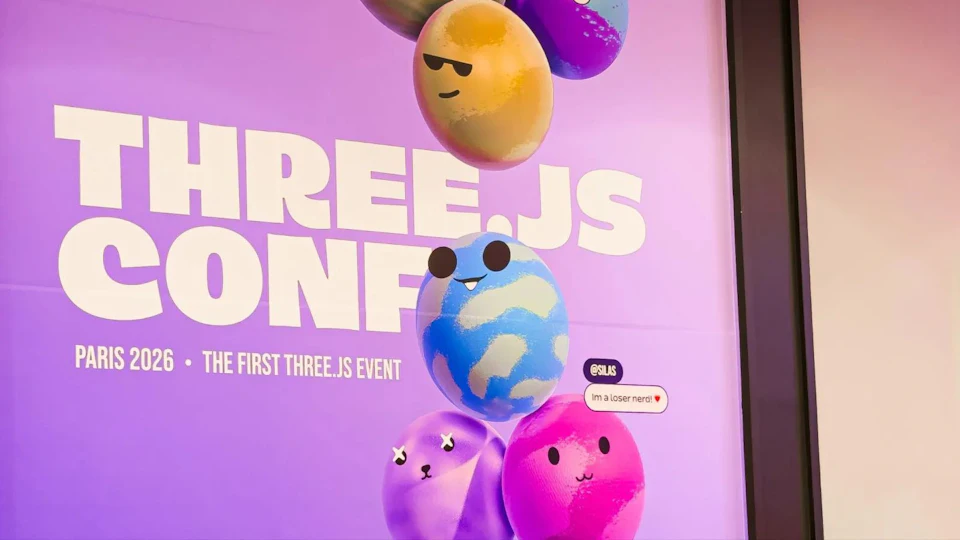
Guang (our Chief Digital Officer), Áron (a fellow Creative Developer) and I took the Eurostar to Paris for the first-ever Three.js conference. Three.js is an open-source library that powers much of the 3D you see on the web. It provides a simple API for adding cameras, lights and objects to a 3D world, without needing to worry about all the complex maths happening behind the scenes. Even Apple trusts the technology to render high-quality 3D models of their devices. Here at Made by ON, we’ve used Three.js for a number of our sites. Air, EY Adventure Awaits, Bhutan and Primary VC to name a few.
But the conference was about much more than the library itself. It was a celebration of everything that makes the web more fun and interactive, breaking away from the flat design conventions we’ve become so used to, and perhaps a little bored by.
Speakers ranged from the creator of Three.js itself, to developers who have built entire products around expanding its capabilities, to creatives responsible for some of the most inspiring websites we’ve ever seen. We met people helping architects model their creations, baseball teams visualise real-time data, and curious students keen to break into this world.
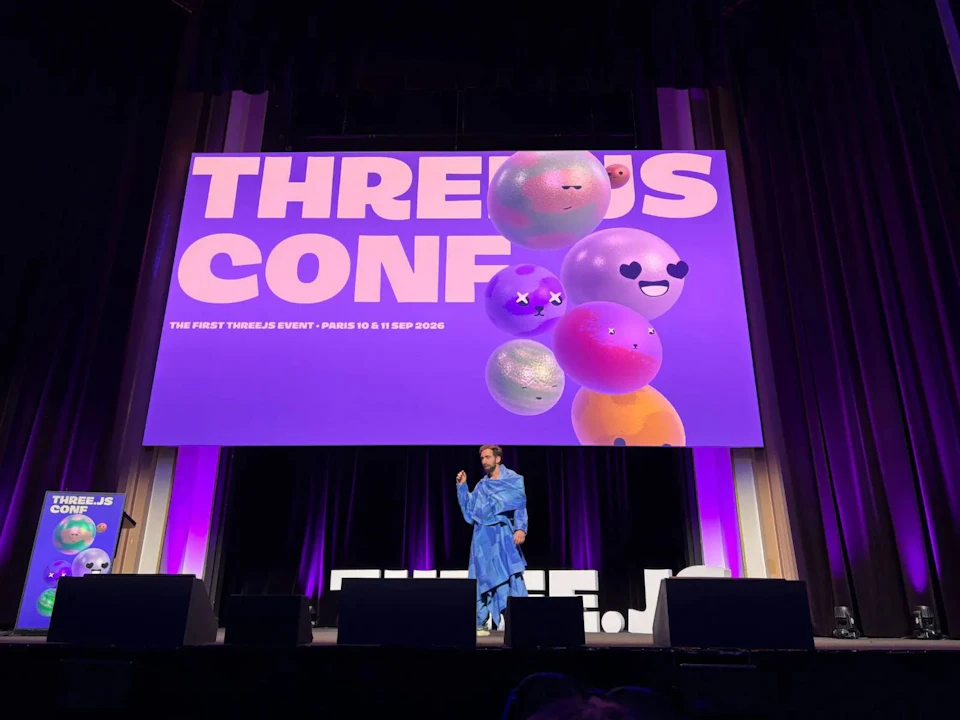
Across two packed days of talks, panels, debates and even roasts, there was more than enough to leave us feeling overwhelmed, inspired and excited about what we might build next. Here are some of my key takeaways.
Embracing the robots
As with many aspects of life today, it was hard to avoid the conversation around AI. Nobody seemed to doubt its capabilities, that ship has definitely sailed. Opinions on its place in our everyday workflows, however, varied.
Mr Doob, the creator of Three.js, was all in. His talk focused on the idea of AI as the next level of abstraction. We no longer need to touch the code in the same way that we no longer worry about the ones and zeros everything ultimately boils down to. This view was shared by a number of less technical attendees, particularly designers, who were using AI to bring their creations to life in ways that simply weren’t possible for them before.
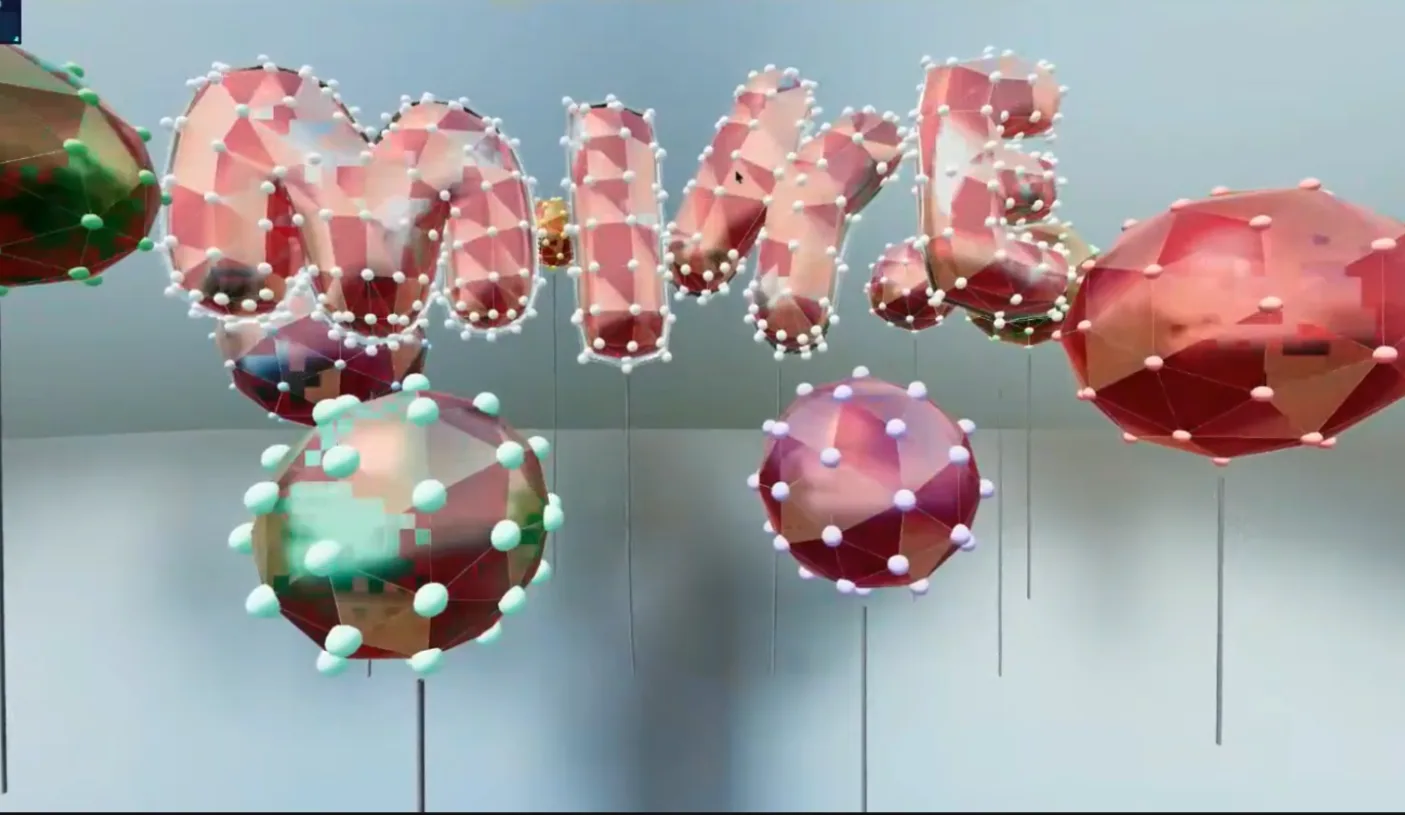
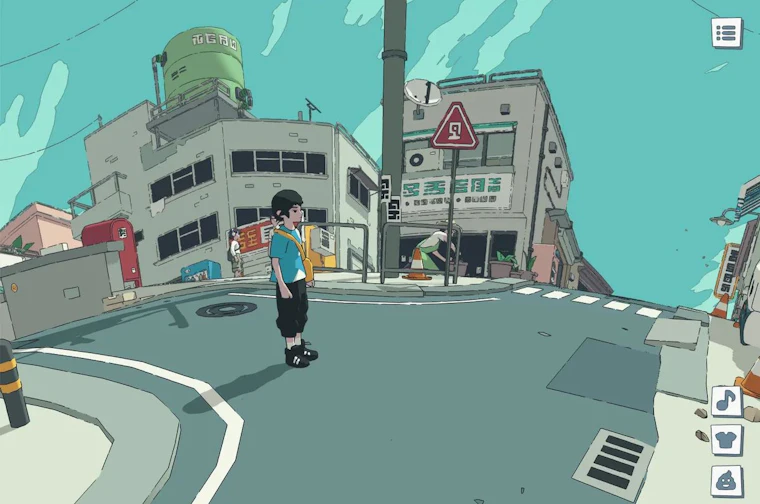
Conversely, a number of speakers spoke proudly about creating their work without AI, or reminisced fondly about a time before it. Vicente Lucendo broke down the creation of Messenger, his incredible passion-project website, which he built over the course of six months. Every detail was handcrafted, considered and revised multiple times. He reflected that, had he supercharged the process with AI and built the site over a weekend, it simply wouldn’t have developed the same sense of personal attachment, love and care that ultimately made it what it became.
As a business at Made by ON we have a desire collectively to remain close to the code and the craft, be it supported by AI tooling or not, as what is clear is that regardless of method, ideas, passion and creativity will always reign supreme.
More tools to learn
Fortunately for all of us, the web never remains static. New libraries, extensions and features built directly into the browser are constantly evolving. What’s less fortunate is the time it takes for all browsers to support these new technologies, and therefore how long we have to wait before we can confidently roll them out to clients.
Right on the cusp of widespread support is WebGPU, the successor to WebGL, which has powered 3D on the web for over a decade. Alongside big performance gains, WebGPU introduces compute shaders, allowing huge numbers of calculations to run in parallel on the GPU. The result is more complex simulations, particle systems and visual effects, without grinding the page to a halt. Renaud Rohlinger demonstrated this with a fluid simulation of over one million particles, a staggering achievement in a browser.
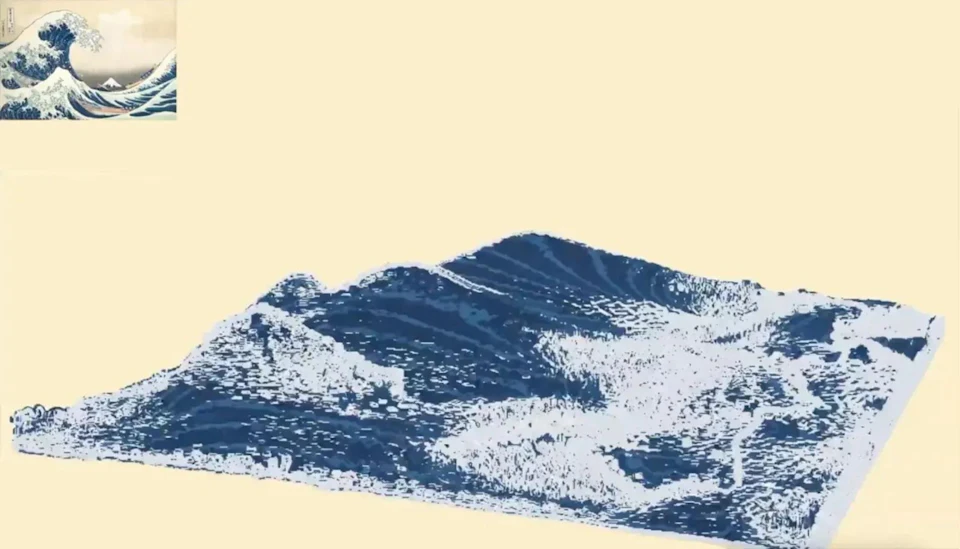
The added capabilities of WebGPU do, however, come at the expense of more complex code. To help mitigate this, TSL (Three Shader Language) was created by Sunag, who gave a talk about its features. TSL provides a more approachable way to write shaders within Three.js, using JavaScript rather than having to write separate, lower-level shader code.
Additionally, two developers from Chrome itself took to the stage to show off a new, almost magical technology called HTML-in-Canvas. Traditionally, the worlds of 3D and standard web elements, such as images, text and links, have remained very separate. A whole range of tricks is needed to keep the two in sync and make them feel like part of the same experience. This new technology changes that, allowing standard HTML elements to be rendered directly inside the 3D canvas. Some crazy examples are already popping up, and widespread browser support cannot come soon enough.
Crème de la crème
The talks we enjoyed most were simply talented artists and developers showing off their work and getting a glimpse behind the scenes of awe-inspiring projects I’d seen out in the wild. In some areas we were reassured to be following similar principles, while in others humbled by the skill and creativity on show.
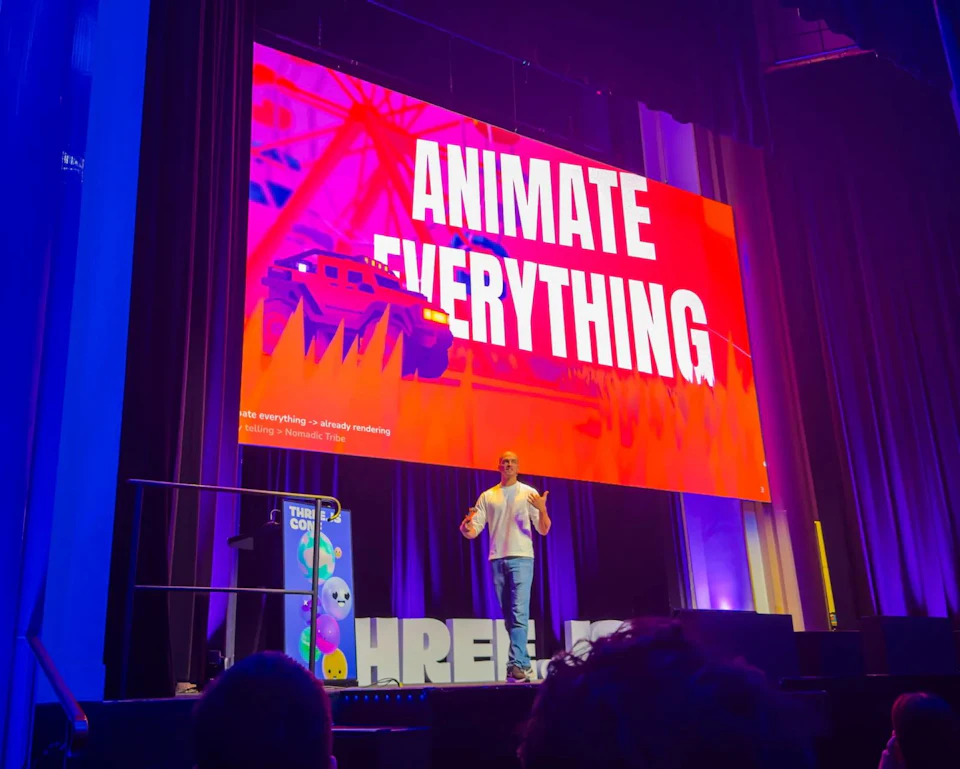
Bruno Simon is probably the closest thing to a celebrity in the Three.js world. His course on the fundamentals probably had been completed by more than half the people in the room. He gave the final talk of the event, outlining his principles for creating a memorable site with points such as ‘animate everything’ feeling like a challenge for us all to pursue. His talk was also filled with examples, some launched well over a decade ago but still feeling fresh today, proving that it’s not the technology but how you use it that matters.
These immersive sites can often feel like outliers. They’re sometimes dismissed as gimmicky, over-engineered or at odds with the web’s increasingly rigid conventions. But perhaps, like high fashion, they can pioneer new ways of interacting with the web that eventually trickle down into everyday experiences.
Being in a room full of people who share that view, and the desire to make the web more fun and interactive, was perhaps the biggest takeaway of all. More than any particular technology or technique, the conference was a reminder of why I became a Creative Developer in the first place and our focus at Made by ON being The Creative Technology Partner in our industry. We all left Paris inspired, full of ideas and excited to help push the web somewhere new.