


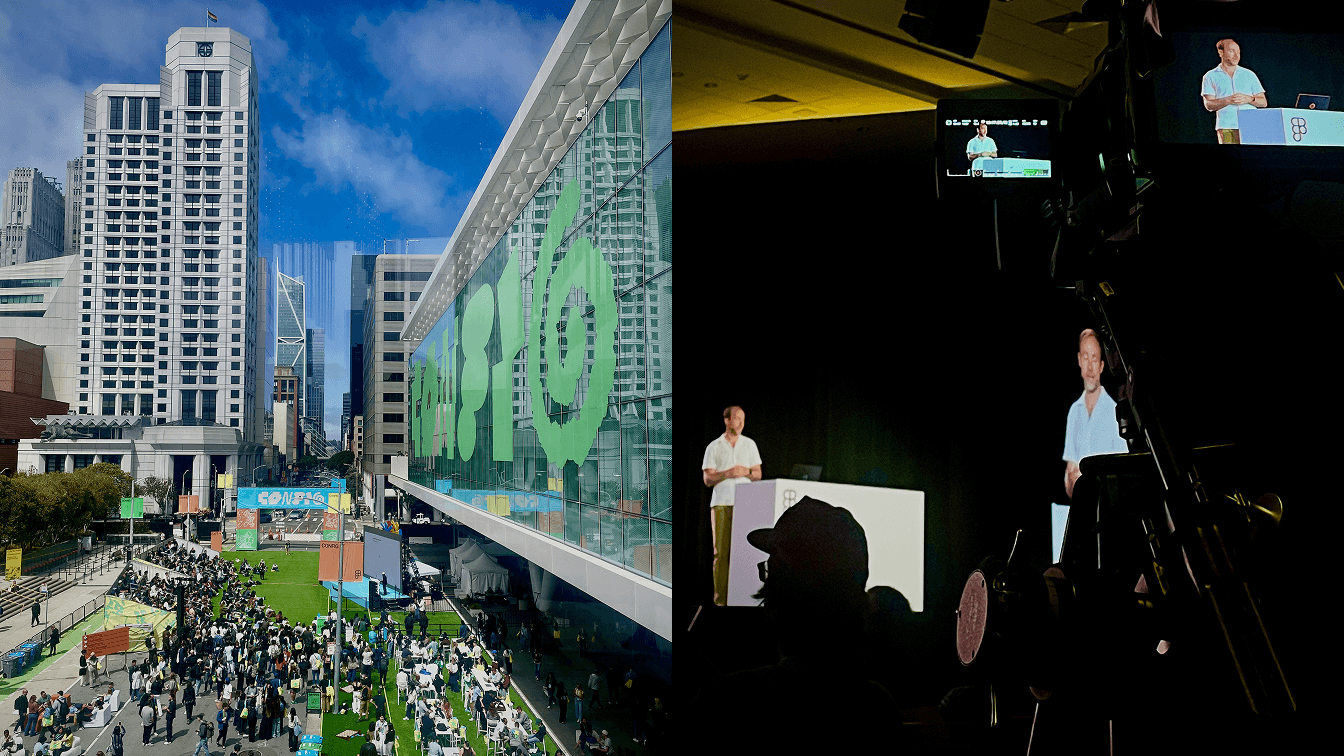

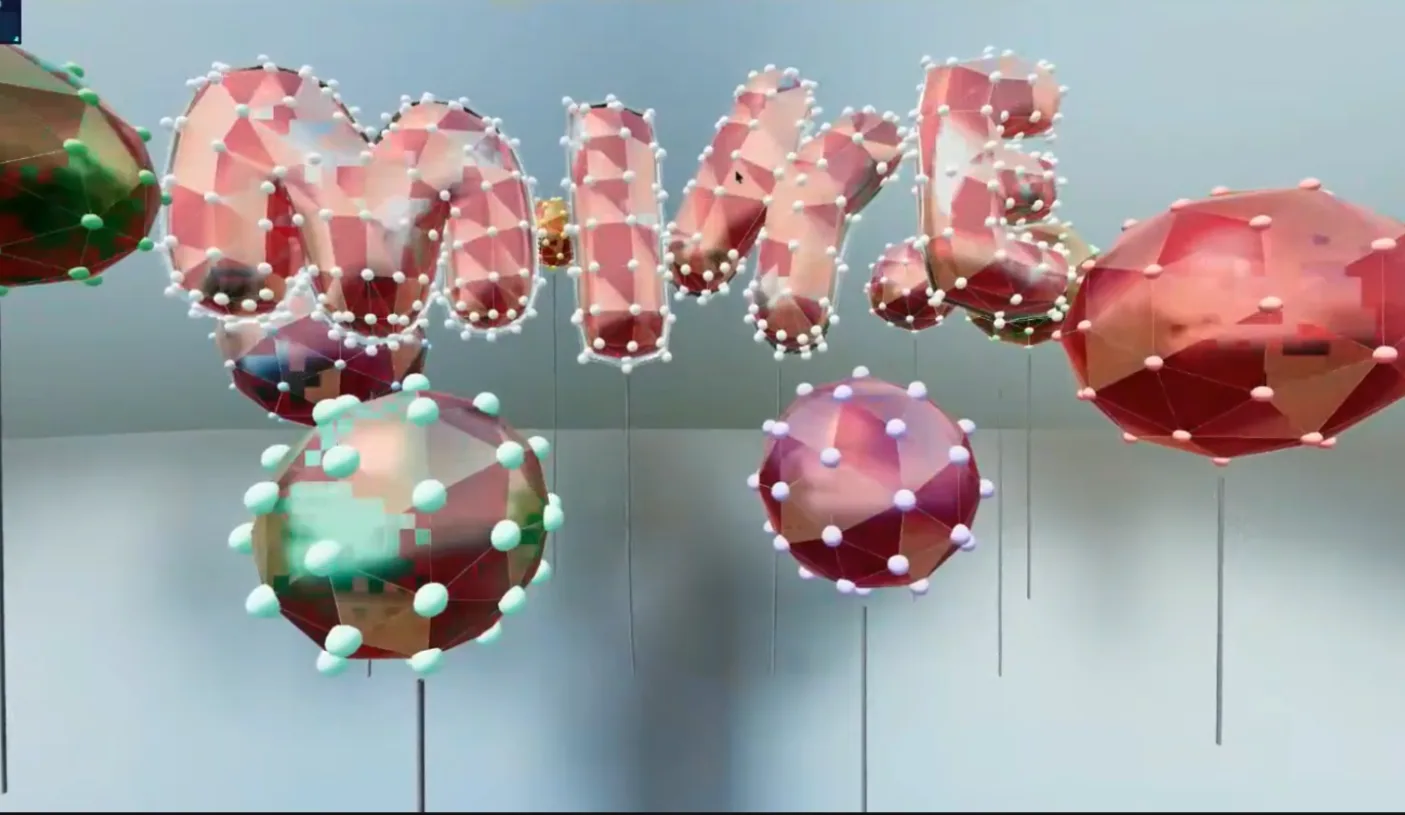



Stepping into events across different cities gives us the space to connect with people who bring entirely different backgrounds, experiences, and perspectives, whether that’s Mike diving into the future of 3D in Paris or Barry exploring emerging tech and the gift of stepping back. For me, that culture of exploration meant returning to Black Tech Fest, an event that has become a defining constant throughout my career.
Settling into my seat for the opening talk at Black Tech Fest 2026, I got talking to the developer next to me. She was three years into her career as a full-stack engineer and attending BTF for the first time. When she asked how long I’d been in the industry, I laughed and said it had been nearly ten years. Her response was immediate: “Wow, you’re really seasoned then.”
Hearing that took me straight back to my early days. I remembered being fresh out of university at my first agency, finding my feet as the only Black employee on the team, and feeling that mix of nervousness and excitement, hungry to learn, keen to impress, and asking questions at every turn. While the pathways into tech have changed over the last decade, that determination and curiosity haven’t. Seeing myself in her shoes was an energising reminder of why events like this matter.
It also made me realise how intertwined my own journey has been with Black Tech Fest. BTF first launched virtually back in 2020 during the pandemic, making 2026 its seventh event. I’ve attended every single one since the start. Watching it grow from that initial virtual broadcast into the major in-person event it is today has been brilliant. On a personal level, it’s also a grounding marker of how far I’ve come. Moving from junior, to mid-weight, to senior over that exact span of time.
That climb from junior to senior often means the rooms you find yourself in start to look quite different. During one of the panels, a senior leader shared some advice that really hit home: “If you are the first or only Black person in the room, it means you have worked extremely hard to get there. Understand the value you bring and the problems you solve. Sometimes we may still be the only Black person in the room. Nine times out of ten we are fighting to stay relevant; the journey can be lonely, but it is worth it.”
That really resonated. As you move up into more senior roles, the number of Black colleagues you see around you tends to drop. Representation matters, and after nearly a decade in tech, being in those rooms and helping keep the door open for others means a great deal to me.
Rewriting History in Real Time
With October being Black History Month in the UK, BTF is always a standout in my calendar. Growing up, BHM in school was largely retrospective, learning about the Windrush generation, key milestones, and the pioneers who paved the way. While understanding that heritage is vital, tech moves in the opposite direction; it is forward-looking by definition, with its own rapid pace and evolving culture.
What makes BTF so special is that it bridges both worlds. It honours our heritage by bringing our culture, music, and energy directly into the space, while focusing squarely on modern craft and what’s next. Most importantly, it transforms Black History Month from something we merely read about in textbooks into something we actively shape. By being in that room, sharing knowledge, and showing up as a community, we aren’t just observing history, we are actively writing the future of the industry.
Being in an environment surrounded by people who not only look like you, but share similar backgrounds, lived experiences, and career hurdles isn’t something you come across every day in tech, and that’s the main reason I keep coming back. It’s inspiring for people just breaking into the industry, but it’s just as good for those of us who’ve been around a while to catch up and see what’s coming next.
One stat mentioned on stage really stuck with me: Black professionals still only make up around 3% of the UK’s IT and Tech workforce, a figure that sits at a very similar level across the creative industries too. It brought to mind a talk at BTF in 2025, which highlighted that Black women made up just 0.7% of the UK’s IT and Tech workforce. The challenge often comes down to retention. Organisations struggle to keep Black hires when there aren’t sufficient support structures in place.
While I’m proud to represent that crossover between tech and creative through my role and background, it’s a clear reminder that there is still work to do.

Curiosity and Learning by Doing
Across the various talks on AI and automation, my main takeaway was quite simple: stay curious, keep asking questions, and keep building.
While automated tools are reshaping our day-to-day roles, they don’t replace human judgement, context, or curiosity. Leaning into that means not waiting until you feel 100% ready or until an idea is completely perfect before you build it. Just make something, see it through, and share what you learn. That mindset is a big part of why I enjoy working at Made By ON. In an agency, you have to stay curious, that’s where good ideas come from. We’re always encouraged to get hands-on with new tech and try things out.
A recent internal project was an example of this. I was tasked with building a feature to dynamically render and export video from a live scene. There was already a preferred library in mind, but I’d spotted an alternative I was keen to test. Rather than sticking strictly to the default path, I was encouraged to build prototypes with both libraries side by side to see how they handled the workload. The alternative library didn’t end up being the right fit, but stress-testing it wasn’t wasted effort. It gave us a much deeper understanding of the problem and showed us the exact architectural capabilities we’d need our chosen library to grow into down the road.

Not every experiment works, and that’s fine. As long as you learn something useful from it and adapt next time, having a go is always better than standing still.
Looking back from where I started as a junior to where I am today as a senior, I’m really grateful that Black Tech Fest has been part of that journey. What BTF does so well (and what the wider industry could genuinely learn from) is that it makes you feel valued and completely deserving to be in the room. You’re reminded that you don’t need to doubt yourself; you’ve worked hard to earn your seat, and you are there because you have the skills, knowledge, and experience to back it up. Most importantly, it allows you to show up authentically. By celebrating our culture and heritage alongside forward-thinking technology, it proves you never have to pick between who you are and where you want your career to go. You can bring both into the room. Here’s to seeing BTF continue to set that standard for many years to come.
