


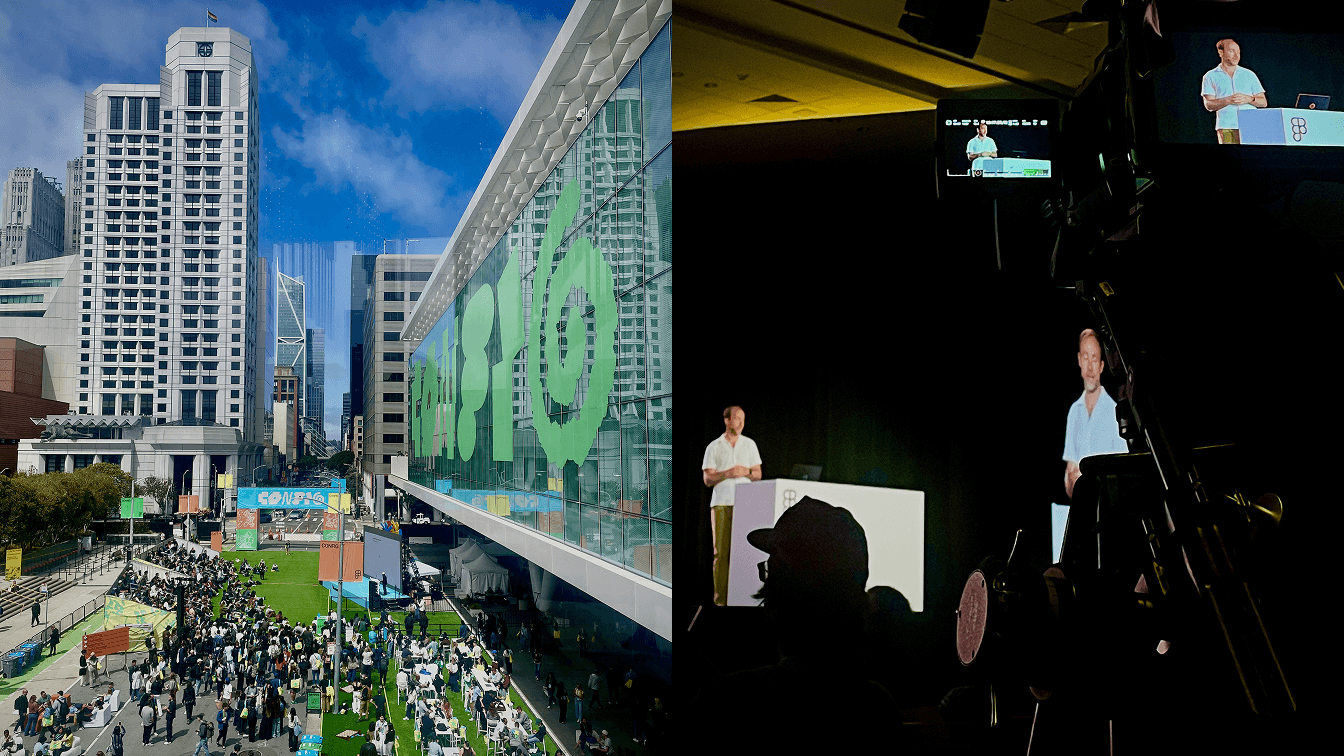





Spotlight is Semrush’s conference on brand visibility in AI search, held at Old Billingsgate in London on 13 October. Last week we wrote about its headline number: in most categories, no brand owns the answer yet.
Helena Dillon, Microsoft Advertising’s regional vice president for EMEA, used her talk to explain what an agent does before it recommends anything. First it has to be able to see your information, and it takes in structured information most easily: full product details, prices, stock and reviews. Then it forms a view from everything it can find at once, including your website, your reviews, Reddit threads, social posts and your competitors’ pages.

Her example was a brand whose website says its products are premium, while its reviews say the quality has dropped and its customers send more back and buy again less often. Faced with both, the agent goes with the evidence rather than the website.
B2B brands aren’t judged on returns, but every claim you make goes through the same check. Microsoft’s Bing team says assistants such as Copilot build one answer by “drawing from multiple sources”, and Forrester’s 2026 buying study found that buyers then check that answer with colleagues and people they trust. If your case study says one thing and a review says another, both the machine and the buyer notice.
What a contradiction costs
A gap is a question your site doesn’t answer and AI fills it from somewhere else, perhaps a review or a competitor’s comparison page. You lose some say in how you’re described, but nobody has a reason to doubt you.
A contradiction is a claim on your site that something else disputes: a headcount that doesn’t match your LinkedIn page, or a case-study result that doesn’t match the client’s own annual report. Now the model has to choose between two versions, and the buyer checking its answer sees both. Your site becomes the source that looks unreliable, and the doubt carries over to the claims that are true.
Most contradictions start as true claims that went stale: a figure that was right at launch gets repeated for three years. So the first job is to cut the claims your evidence no longer supports, and to date the ones it does. You can’t control what a model learned in training or what other people write about you. Your website is the part you can fix.
How the engines read your site
Vercel and MERJ’s 2024 crawler study found that the crawlers behind ChatGPT and Perplexity read only the HTML your server sends. Gemini uses Google’s crawler, which renders the whole page. So if your results or case studies only appear once a script runs, Gemini and ChatGPT can end up describing two different versions of your site. It’s one reason we build sites that machines can index and read as fully as people can. The Cool Earth pages that an AI cites on El Niño, which we wrote about last week, work that way.

Schema and llms.txt are often sold as the fix. Markup labels a claim, but it doesn’t make the claim true or bring it into line with your reviews, and the evidence that it moves citations is thin. Ahrefs tracked 1,885 pages that added schema and found that, on pages AI already cited, citations in ChatGPT and Google’s AI Mode barely moved. Of the roughly 38,000 llms.txt files it studied, 97% got no requests at all in May. Google says its AI features need neither.
What the engines make of your site is also less of a black box than it was. Bing Webmaster Tools now shows, in preview, how often your pages are cited in Copilot and Bing’s AI answers. Trackers such as Semrush’s AI Visibility toolkit and Ahrefs’ Brand Radar show how often your brand appears in AI answers against your competitors. (Semrush is a client.)
What to do now
Here’s how you can start:
- List the ten questions buyers ask before they shortlist you, and the claim on your site that answers each.
- Read your reviews and directory listings against those claims, and mark where they disagree.
- View the source of the pages that carry those claims, and check the words are there.
- Track how AI engines answer your buyers’ questions each month, with whichever of those tools you already use.
- Leave schema and llms.txt until last.

If you’d like help with any of this, our AI visibility audit goes further than these steps. It shows how each AI engine reads your site and describes you against your competitors, and what to fix first.

